











ワルシャワの街にある、憂鬱な記憶。
Column|2026.3.23
Text_Toshinori Okada
Photo_Toshinori Okada
世界には行きたい街がたくさんある。いろいろな理由のなかに“街の名前がいいから”というのが、自分の場合はある。そのひとつが、ワルシャワだ。
ワルシャワという響きが気に入ったのは、デヴィド・ボウイの「ワルシャワの幻想」(原題はWarszawa)が好きだから。簡素だけど重厚感ある曲。反復を重ねる旋律は冷たく、まるで時間が止まっているように感じる。この曲でボウイが歌っているのは、意味のない言語だといわれている。ボウイがつくった架空のヴォーカリゼーション。誰も理解できない歌詞を、誰か のために発しているなんて、とてもミステリアス。
この曲にあるような、凜とした雰囲気と孤独感がある街。抑圧と閉塞という共産主義時代の薫りが残る、なんともやるせない空気感が漂っている、それがワルシャワ。「ワルシャワの幻想」の舞台となった街に、ぜひ行ってみたいと旅立った。
そうして着いたワルシャワは、洗練された都会。そりゃポーランドの首都であるわけで、ビルもあれば洒落たブティックもある。若者たちはニコニコしていて社交的。英語が喋れる人も多く、フレンドリーに対応してくれる。治安も良く、夜の街歩きにも大きな不安はない。でもやはり、どこか、奇妙な感じがする。
その原因は、街のどこからでも視界に入る「文化科学宮殿」にあった。44階建てのこの建物はソビエト連邦の指導者だったヨシフ・スターリンからの贈り物。当時のポーランドはソ連の影響下にある社会主義国であり、この宮殿はソ連の文化的・政治的な影響力を象徴するものだったという。
こんなジョークがある。「ワルシャワでいちばん美しい眺めは、文化科学宮殿の展望台から見た景色だ。なぜならそこからは文化科学宮殿が見えないから」。この建造物は、多くのワルシャワ市民から嫌われていたようだ。
第二次世界大戦後、ワルシャワは市街地の約85%が破壊され、ほぼ“存在しない街”になっていた。それを残った市民が一丸となり「染みのひとつまで復元する」とばかりに、18世紀の画家であるベルナルド・ベロットの絵画、戦前の写真、設計図、人々の記憶をもとに再建していく。
そして再構築されたワルシャワの旧市街はユネスコの世界遺産に登録される。その理由は「美しいから」ではなく、“破壊された街が絵画や記憶、そして市民の意思をもとに、極めて高い完成度で再建された”ということが、人類史的に例がないと評価されたからだという。
そうして復興が進むなか造られた、市民の意思によるものではない建造物、それが「文化科学宮殿」だった。
現代的で洗練されたワルシャワの街だが、そこでじっと耳を澄ますとボウイの「ワルシャワの幻想」が通奏低音のように流れる。それは街の記憶が奏でているのかもしれない。
Warsaw’s Streets Hold Melancholy Memories.
There are many cities in the world I want to visit. Among various reasons, for me, there is the one: “because the city’s name sounds good.” One such city is Warsaw. I fell in love with the sound of “Warsaw” because I love David Bowie’s “Warszawa.” It is a simple yet profound and heavy piece of music.A city with a dignified atmosphere and a sense of solitude, much like that song. A place where the scent of the communist era—oppression and closure—lingers with a somehow heartrending air. That is Warsaw. I set off, wanting to visit the city that became the stage for “Warszawa.”
The Warsaw I arrived in was a sophisticated metropolis. After all, it is the capital of Poland, with skyscrapers and stylish boutiques. Young people were friendly and sociable. And yet, something felt strange. The cause was the “Palace of Culture and Science,” visible from everywhere. A gift from Joseph Stalin, this 44-story building was a symbol of Soviet influence.
There is a joke: “The most beautiful view in Warsaw is from the terrace of the Palace of Culture and Science, because that’s the only place you can’t see the Palace.” This structure was clearly loathed by many citizens.
After WWII, Warsaw was almost a “non-existent city,” with 85% of it destroyed. The citizens united to reconstruct it “down to the last spot” based on the paintings of Bernardo Bellotto, pre-war photos, blueprints, and human memories. Its Old Town became a World Heritage site because this unprecedented feat—rebuilding a destroyed city with such perfection based on will and memory— was highly valued. In contrast, the “Palace of Culture and Science” was built without the people’s consent. Even in today’s modern Warsaw, Bowie’s “Warszawa” flows like a basso continuo. Perhaps it is the memory of the city playing.
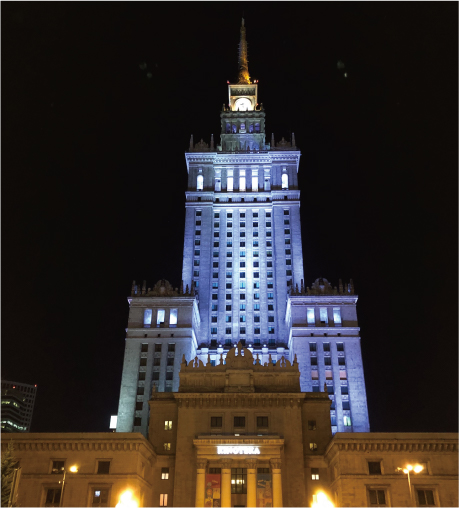
異様な存在感を放つ「文化科学宮殿」。
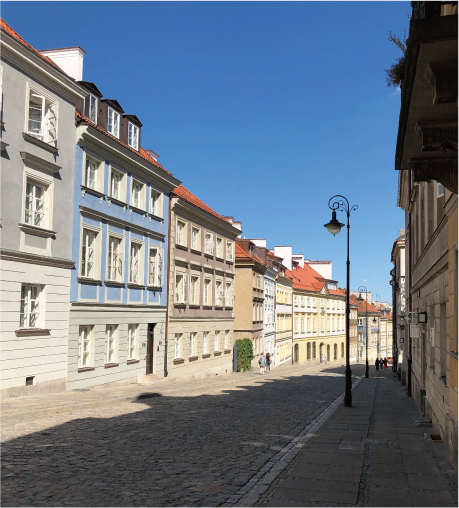
普通の街並み「染みのひとつまで再現」された。
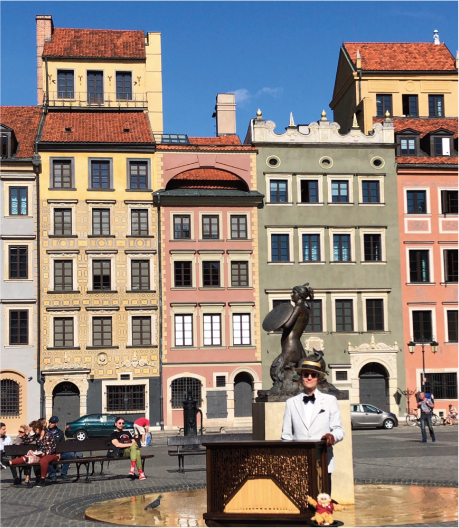
美しく、のどかな街、ワルシャワ。