







〜 日本の工法 〜
Feature | 2026.1.24
©小田原文化財団
全国から集まった技と素材。
江之浦測候所には、古来の日本建築が培ってきた素材や自然との向き合い方を、現代の工法と組み合わせて表現する姿勢があるように思われる。敷地には茶室、庭園、門、光学硝子舞台、ギャラリー棟などが点在し、それぞれに日本建築の歴史的要素や素材が配置されている。建築を単体ではなく、ランドスケープを含む敷地全体として捉える点に特徴があり、自然環境と建築の関係を考える場になっているようだ。
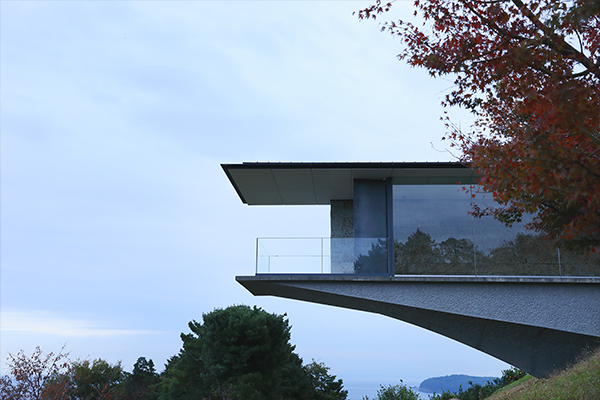
日本の建築は、木・石・土といった自然素材を中心に発展し、地形や気候と密接に関係してきた。江之浦測候所の主要施設のいくつかは海に向かう地形を生かし、光の取り込みや眺望が空間構成の要素になっている。
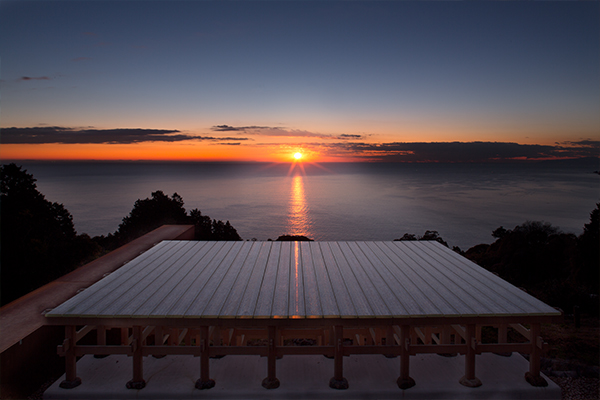
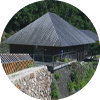
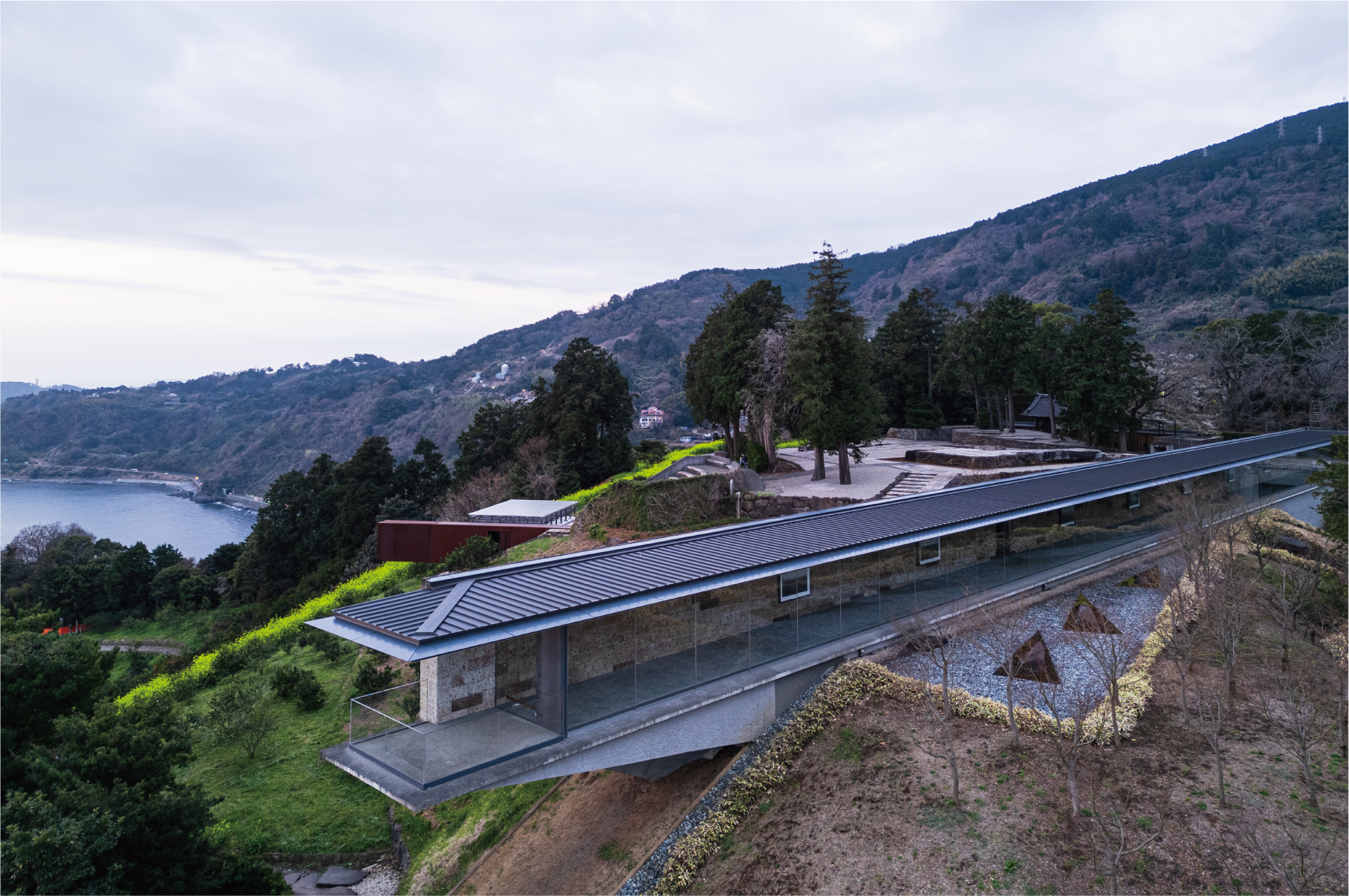
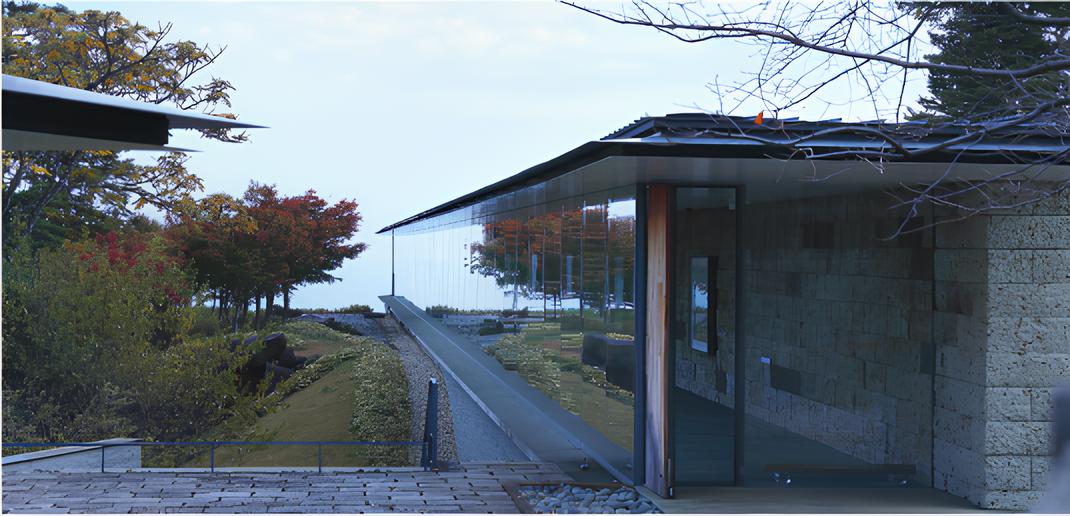
コンセプトを象徴する代表的な建築物である「夏至光遥拝100メートルギャラリー」は、長く伸びる軸線が海側に開き、壁に大谷石、反対側にはガラスが用いられている。天然と人工といった異なる素材と眺望を結び付ける構成で、自然光や海景を内部に取り込む設計が採用されている。
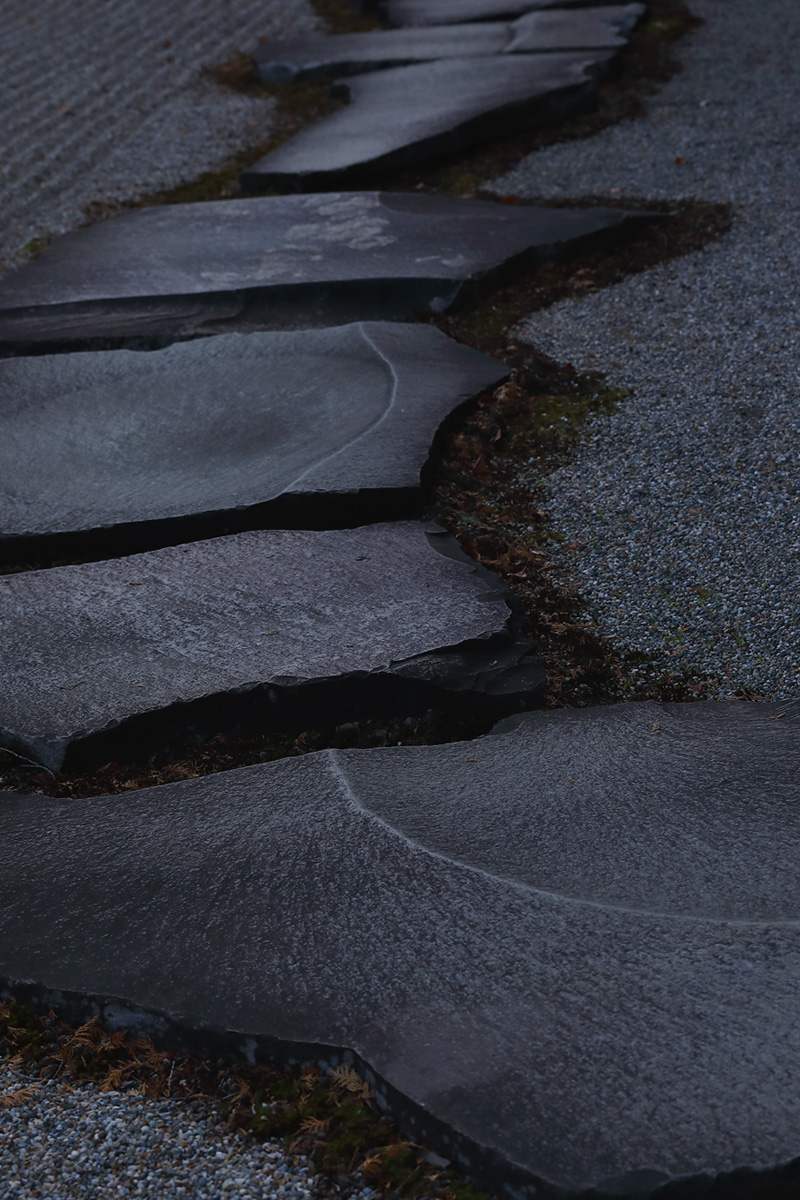
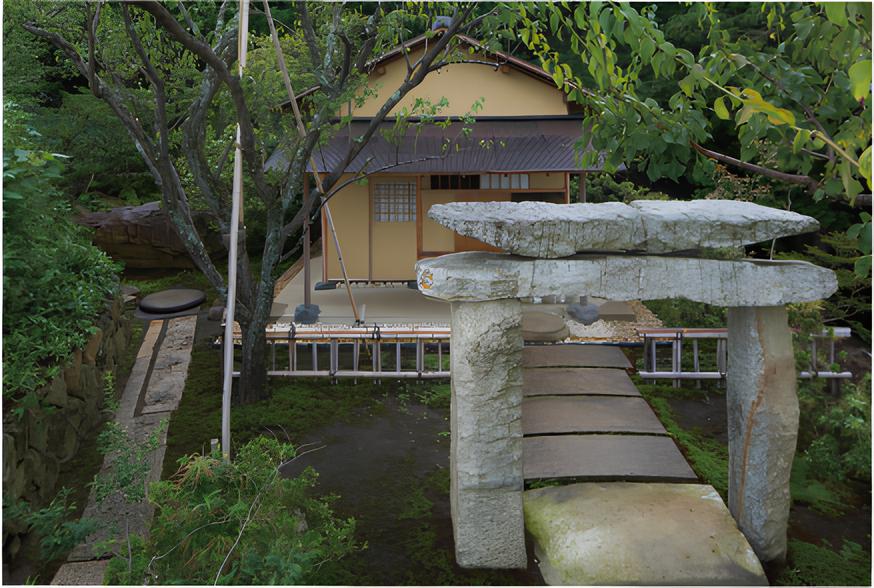
素材への意識は、石舞台や庭園にさらに明確に現れている。敷地に用いられる石材には近隣産の根府川石や小松石があり、庭園の景石には早川石丁場群跡から出土した江戸城石垣用の巨石が使われている。石材は、地質や歴史を示す要素となり、造園は景観づくりだけではなく、歴史を読み取る手掛かりになっている。
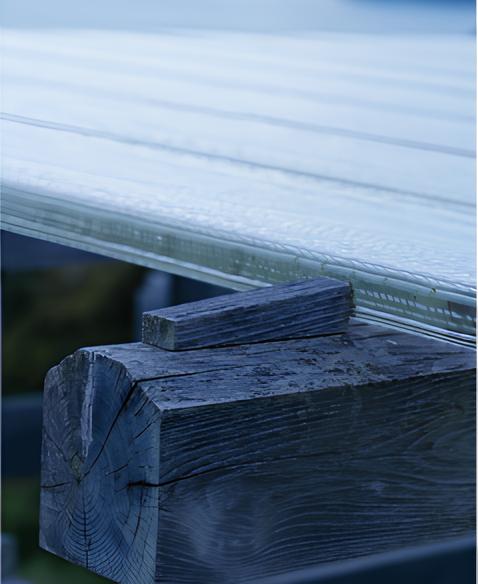
茶室「雨聴天」は国宝茶室「待庵」をもとに設計され、入口前の沓脱石には光学硝子が用いられる。内部は二畳台の小空間だが、壁面の小さな窓から光が差し込み、その陰影が空間に奥行きをもたらせている。
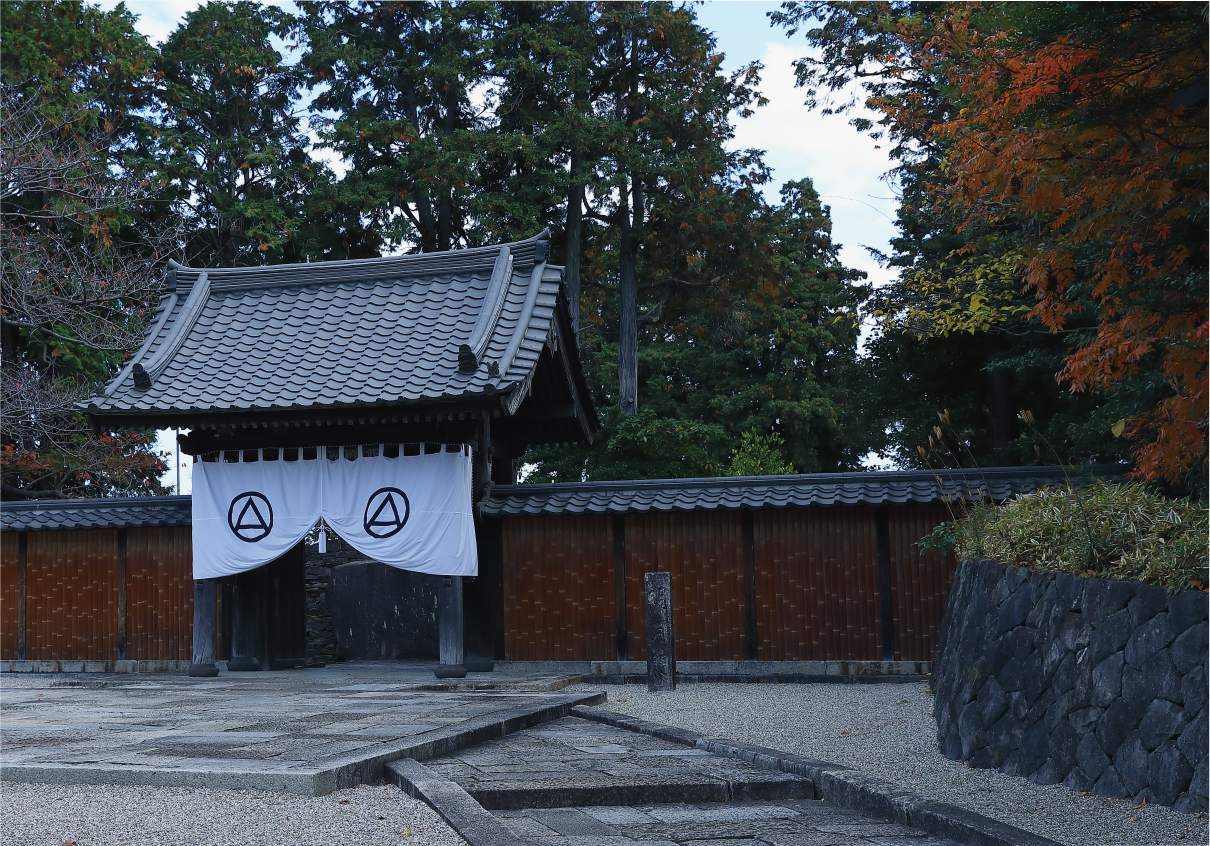
門の存在も重要。明月門は室町時代の山門が茶人の邸宅を経て、最終的に根津美術館から移築された。歴史ある門が敷地の入口に配置され、敷地へ入る際の意識を切り替える役割を担っているように感じられた。
江之浦測候所では、歴史的建築の移築、地域の石材、光を取り込む設計など、多様な方法が敷地全体に展開されていて、訪れる人に知的な刺激を与えてくれる。
Japanese Craftsmanship
Techniques and materials gathered from across Japan.
Enoura Observatory appears to express traditional ways of engaging with nature and materials by combining them with modern methods. With various structures dotted across the site, it is characterized by perceiving the entire landscape as one. It seems to serve as a place to contemplate the relationship between the environment and architecture.
Japanese architecture has historically developed in close relation to terrain and climate, centered on natural materials. At Enoura Observatory, some facilities appear to utilize the slope toward the sea, making light and views integral elements of their spatial composition.
The “Summer Solstice Light-Worship 100-Meter Gallery” symbolizes the concept with an axis opening toward the sea, combining Oya stone and glass. It appears to employ a design that integrates natural light and the seascape, linking the view with both natural and artificial materials.
The awareness of materials appears even more clearly in the stone stage and gardens. With local stones and massive blocks intended for Edo Castle in use, the stones serve as elements of geology and history. Landscaping seems to be not just for scenery, but a clue for reading history.
The “Uchoten Tea House” is designed after the national treasure “Tai-an,” featuring an optical glass entrance stone. Within the tiny space, light from small windows creates shadows that seem to bring a sense of depth to the room.
The presence of gates is also significant.“Meigetsu Gate”, a relocated Muromachi-period gate, stands at the entrance. It felt as though this historic gate plays the role of shifting one’s consciousness upon entering the grounds.
At Enoura Observatory, various methods—such as relocating historic buildings, using local stones, and designing with light—are deployed across the site. These elements seem to provide visitors with intellectual inspiration.
小田原文化財団 江之浦測候所
《事前予約・入替制》
・午前の部/10:00〜13:00
・午後の部/13:30〜16:30
ご見学の2日前までにインターネットからの予約が必要です。
・休館日/火・水曜日、年末年始および臨時休館日
※施設内の特性と来館者の安全性を考慮し、
中学生未満(乳幼児含む)の来館はNG。

江之浦測候所構想・小田原文化財団設立者 杉本博司 展覧会
『杉本博司 絶滅写真』
本展では、杉本の初期から現在に至る銀塩写真65点が展観されます。
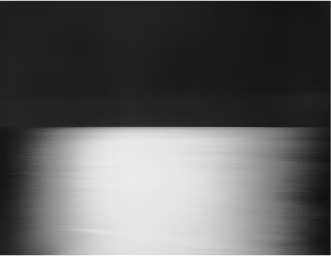
杉本博司 《相模湾、江之浦》 2025年
ゼラチン・シルバー・プリント 119.4×149.2cm
© Hiroshi Sugimoto / Courtesy of Gallery Koyanagi
《会場》
東京国立近代美術館 1F企画展ギャラリー
《開催日時》
・2026年6月16日(火)~
9月13日(日)
・10:00-17:00
(金・土曜10:00-20:00)
入館は閉館の30分前まで

◎主催/東京国立近代美術館、日本経済新聞社

閲覧中の特集はこちら