





~ 天空の位置 ~
Feature | 2026.1.24
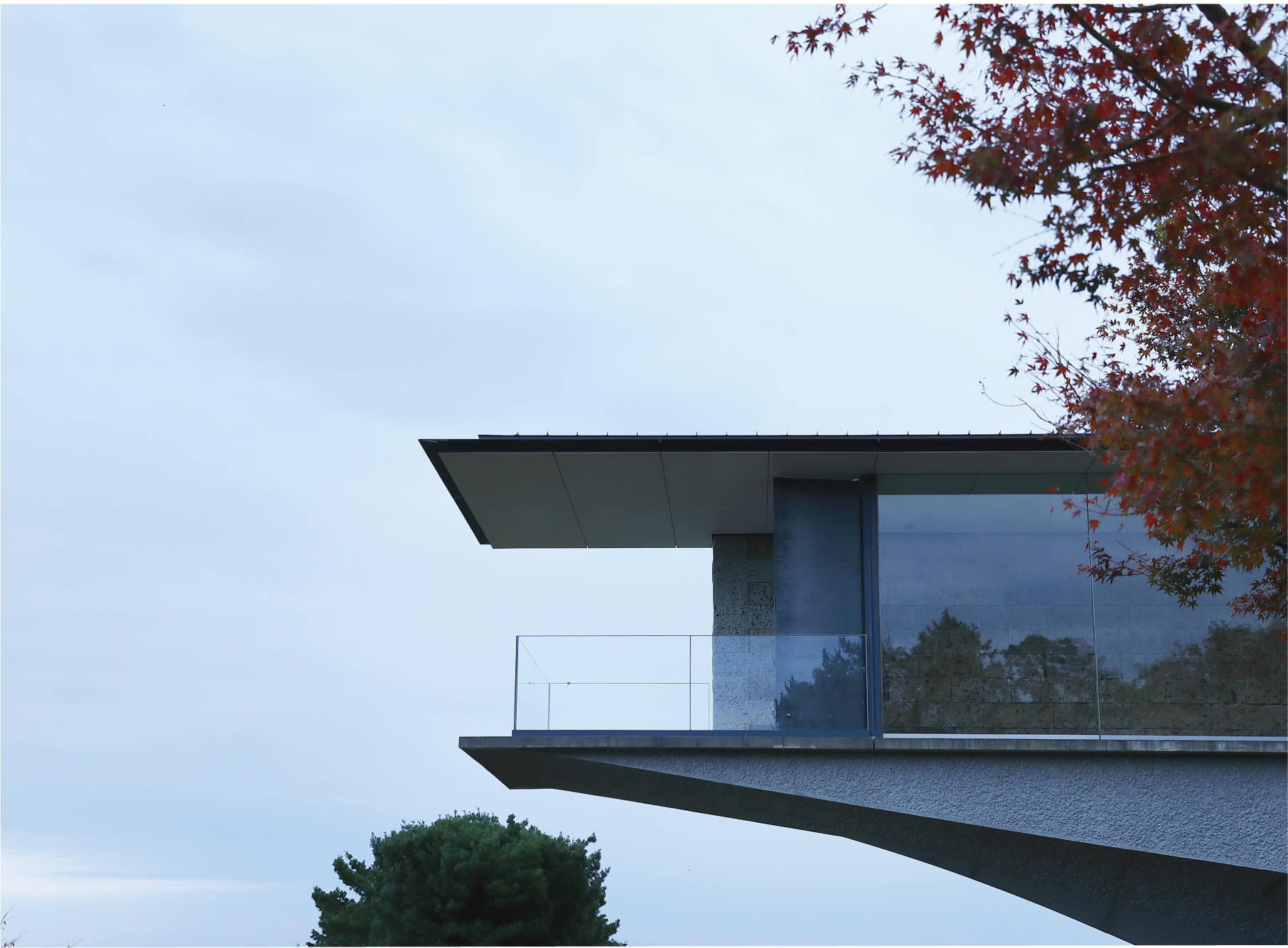
江之浦測候所という“ 観測の場所”。
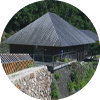
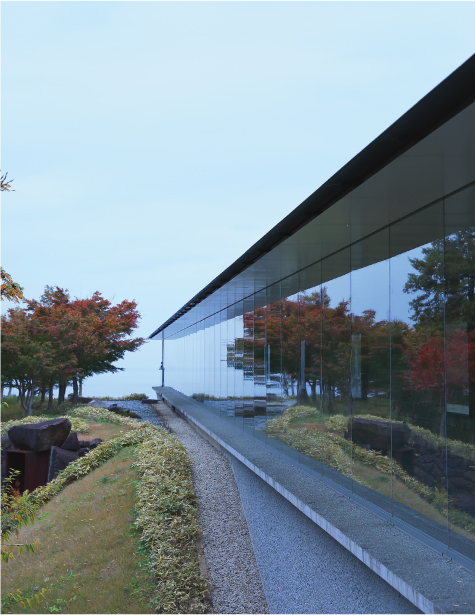
江之浦測候所という名は、キャッチコピー的に付けられているのではない。ここにあるのは本来の意味で、天空の動きを読むために構想された稀有な建築群。春分・秋分、そして夏至と冬至といった、一年の節目をかたどる太陽の軌道に沿って配置されているのではと思われる建造物。それはまるで、光がつくる線と影を手掛かりに、時間そのものが体験できる装置のようだ。
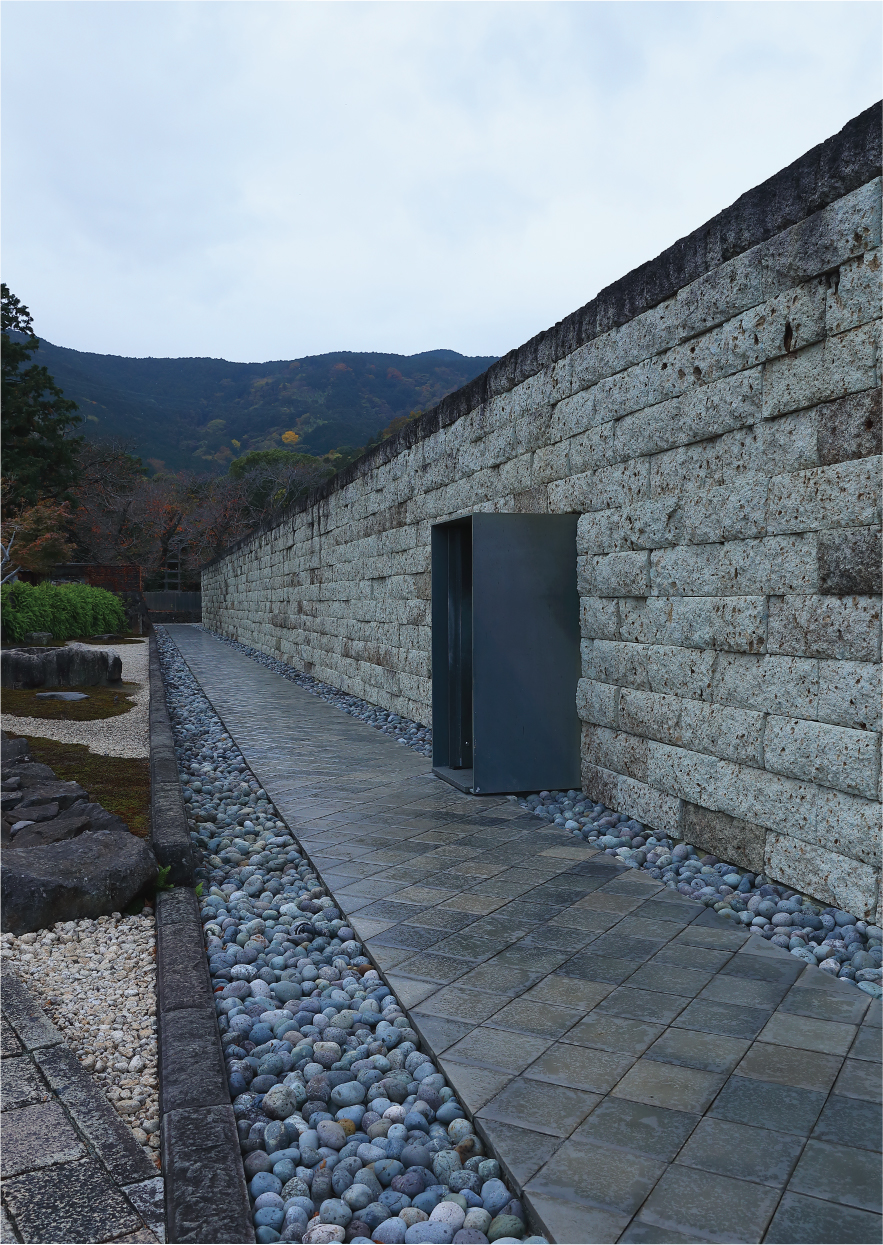
夏至には最も北寄りから太陽が昇る。それに呼応するように延びる「夏至光遥拝100メートルギャラリー」。太陽の最北点に向けて設けられた、古代の祭祀を思わせる一直線の通路。構造壁は大谷石の自然剥離肌に覆われ、光の角度によって表情が変わっていくのだろう。
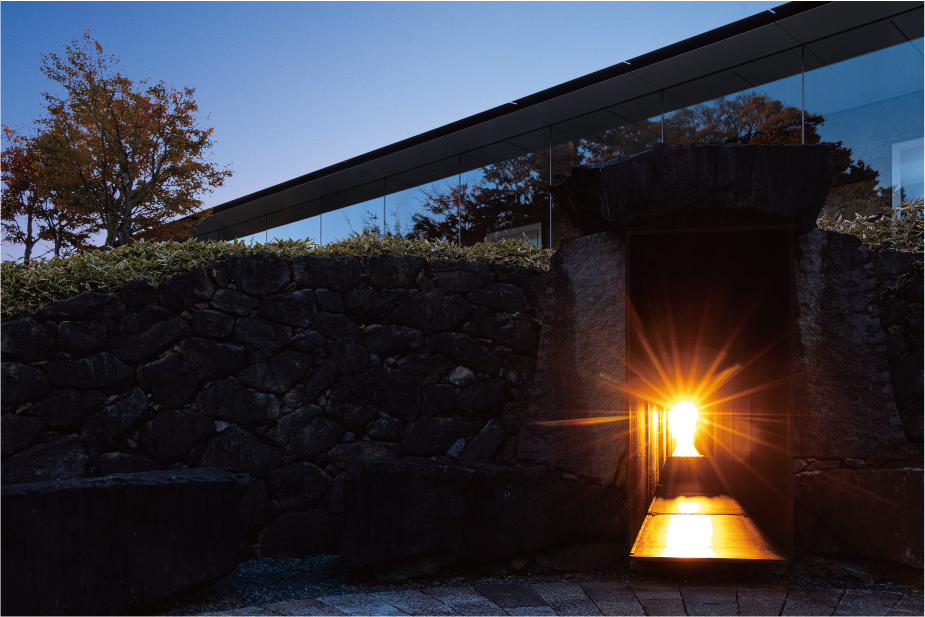
冬至の太陽を受け止めるのは「冬至光遥拝隧道」。冬至の朝に一本の光が内部を貫くよう設計されている。薄闇のなか沈黙が満たされる空間に、冬至の朝だけ時間が線を描く。
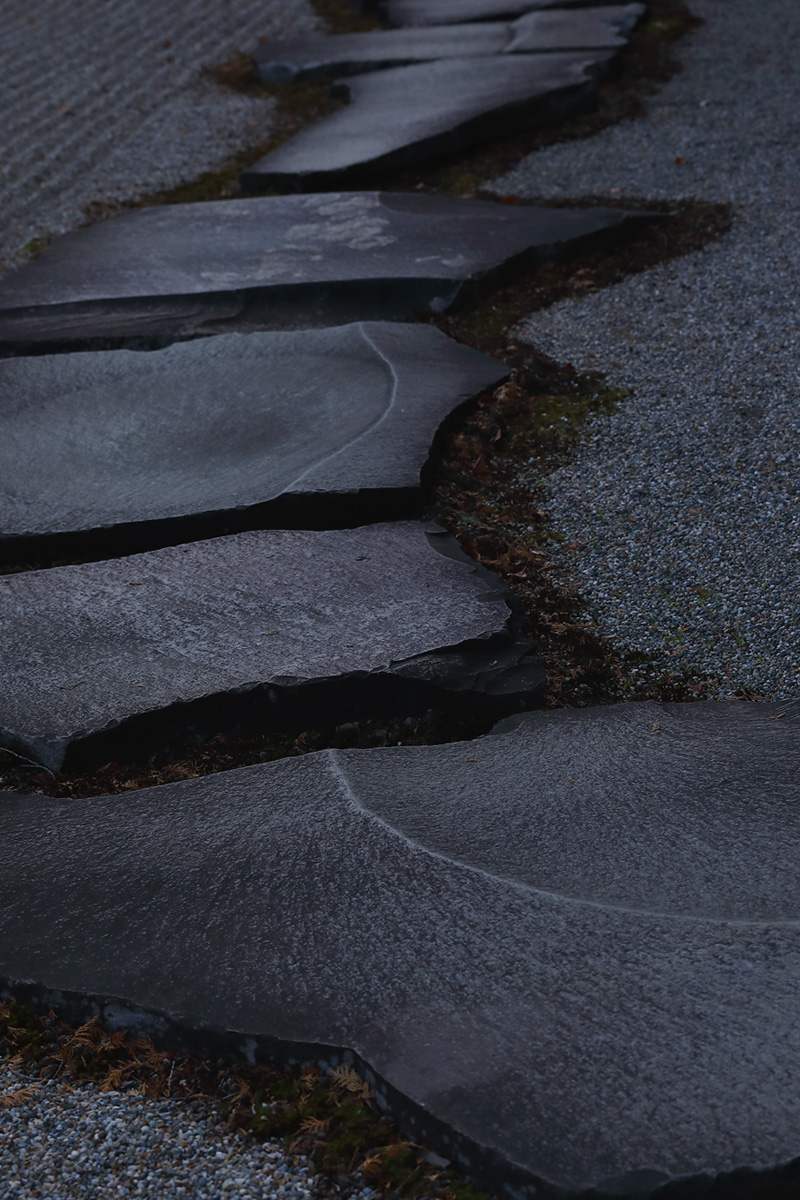
これら天体と人を結ぶ空間に使用された素材にも、太陽と時間を測る思想が息づいているようだ。左官の土壁、野面積みの石、敷地を縁どる石積みなど。人の手が入りながらも、地層の荒々しさや古い記憶をあえて残した素材たち。自然が刻んだ時間と、建築が刻む時間。その二つがここに存在しているように感じられた。
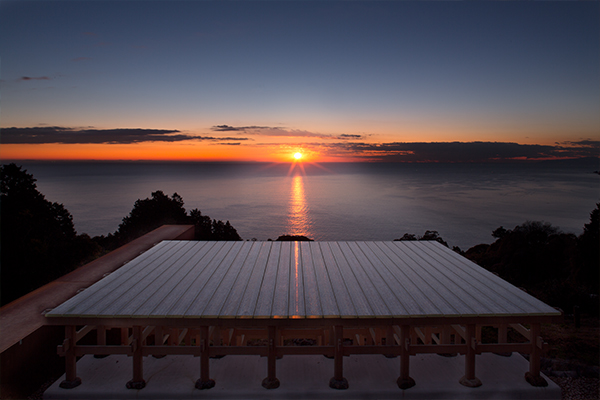
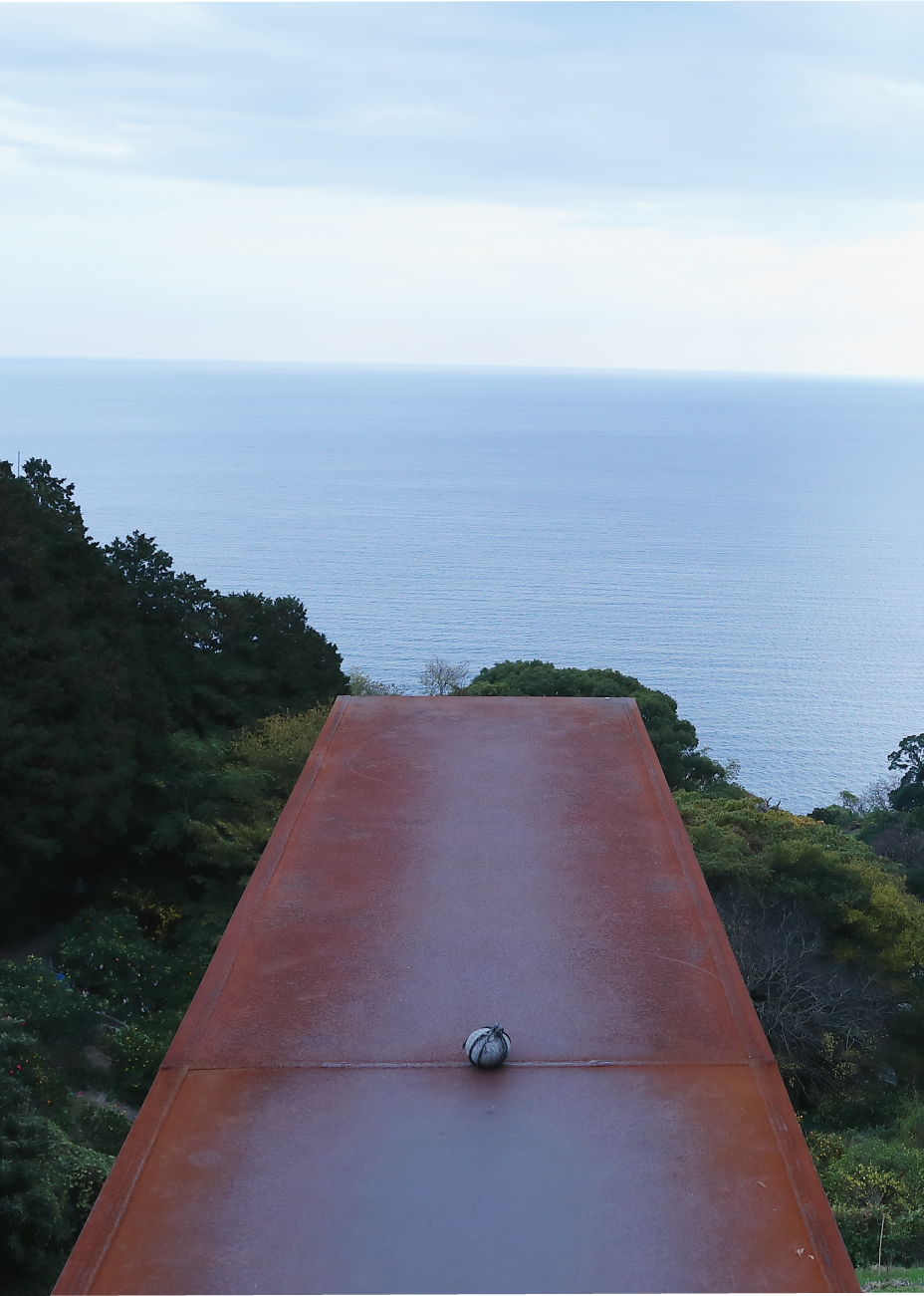
そして、江之浦測候所を特別な場所にしているのは、相模湾を正面に抱くその景観である。眼下にはゆるやかな水面の弧がひらけ、遠くには三浦半島や伊豆大島の影が淡く浮かぶ。太陽はここで、海から昇り、山へと静かに沈んでいく。
海と空が溶け合うその場所で、私たちは江之浦測候所を介して、光と時間の交わる瞬間に触れることができる。
江之浦測候所は、単なるアート空間ではない。ここは太陽の軌跡を建築と素材と地形によって可視化し、現代の人が失っている大らかな自然の時間を取り戻す場所。普段、私たちは空を見ているようで、実際にはほとんど見ていない。しかしここでは、太陽の位置が建築の線となって、静かにはっきりと自身の身体へと届く。
A Place in the Sky
Enoura Observatory: Site for Observation.
The name “Enoura Observatory” is not a mere catchphrase; it refers to a rare group of structures conceived to read the movements of the heavens. Arranged along the sun’s path during solstices and equinoxes, the site appears to be an apparatus for experiencing time itself through lines of light and shadow.
During the summer solstice, the “Summer Solstice Light-Worship 100-Meter Gallery” stretches toward the sun’s northernmost rising point, like a straight path for an ancient ritual. Its Oya stone walls, with their naturally peeled texture, likely change their expression with the shifting angle of light.
The “Winter Solstice Light-Worship Tunnel” is designed for a single beam of light to pierce its interior on the winter solstice morning. In this space filled with silence and dim light, time appears to draw a line only on that specific morning.
The materials used in these spaces—plaster, unhewn stone, and masonry—seem to breathe the philosophy of measuring time. While shaped by human hands, they retain a raw, geological memory. It felt as though two types of time exist here: one carved by nature and another by architecture.
What appears to make Enoura Observatory a special place is its landscape facing Sagami Bay. Below, a gentle arc of the water’s surface opens up, while the Miura Peninsula and Izu Oshima appear faintly in the distance. Here, the sun rises from the sea and sets quietly into the mountains.
In this place where the sea and sky dissolve into one, it seems that through the medium of Enoura Observatory, we can touch the moments where light and time intersect.
Enoura Observatory is more than just an art space; it appears to be a place to reclaim the expansive time of nature that modern people have lost. It visualizes the sun’s trajectory through architecture, materials, and terrain.
While we may think we look at the sky, we rarely truly see it. Here, the sun’s position becomes architectural lines, appearing to reach one’s body quietly yet clearly.

閲覧中の特集はこちら