









〜 時代の部分 〜
Feature | 2026.1.24
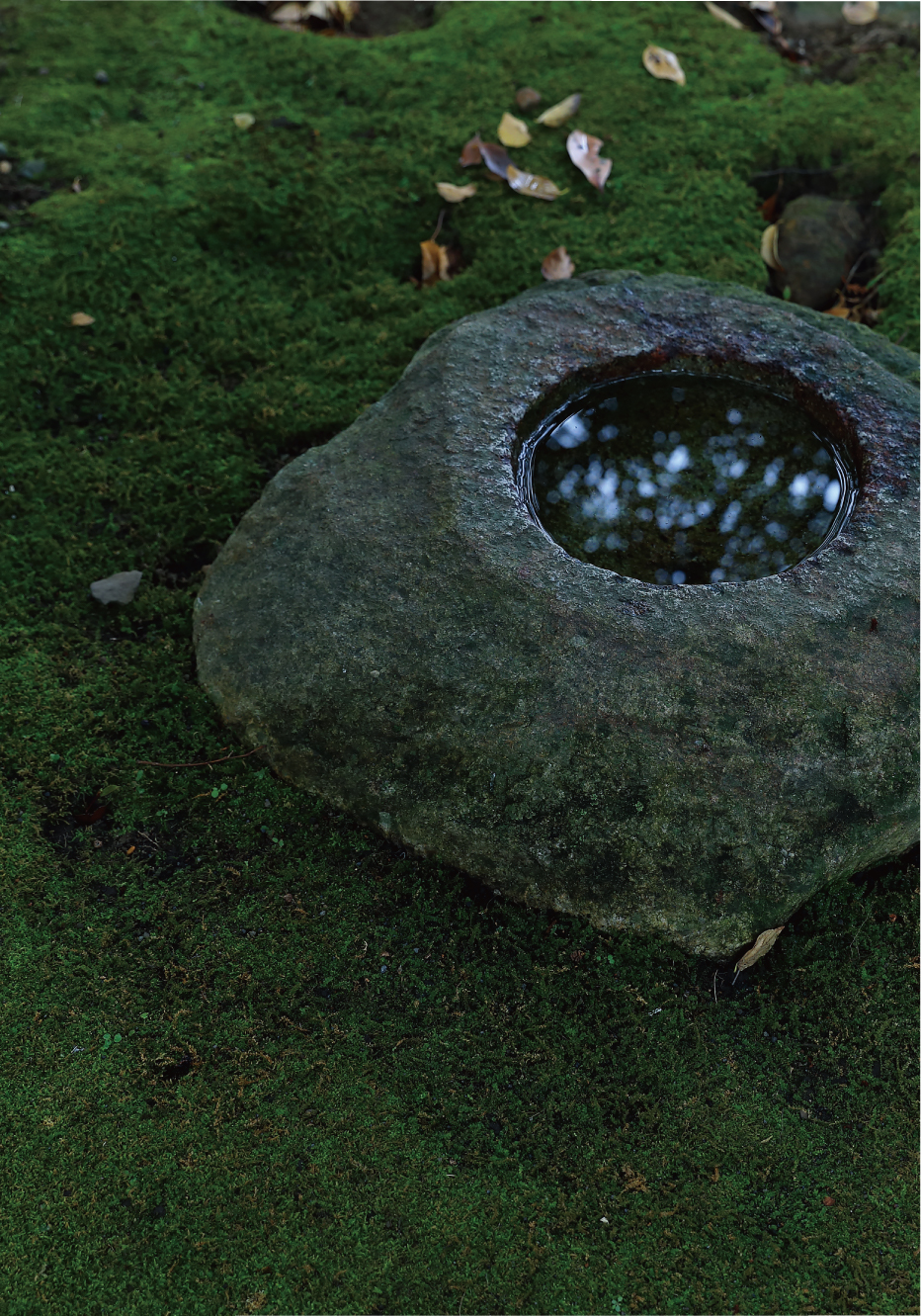
敷地を散策しながら様々な時代を想う。
江之浦測候所には、時間はひとつの線としてではなく、幾重もの層として存在しているようだ。それは例えば、古代の石、中世の石塔、江戸の灯籠、近代の都市の敷石といった、本来なら交わることのない断片。それらが光や風とともにひとつの風景を形づくる。ここでは、時代は積み重なる地層のように並び、互いの境界をぼかしながら溶け合っていくようだ。そのなかを歩くということは、時間を遡るのでも進むのでもなく、層と層のあいだを漂う体験をすること。
敷地内を歩けば、さまざまな時代が静かに顔を現す。それは歴史というより、もっとあやふやな、時代の気配といったものだ。
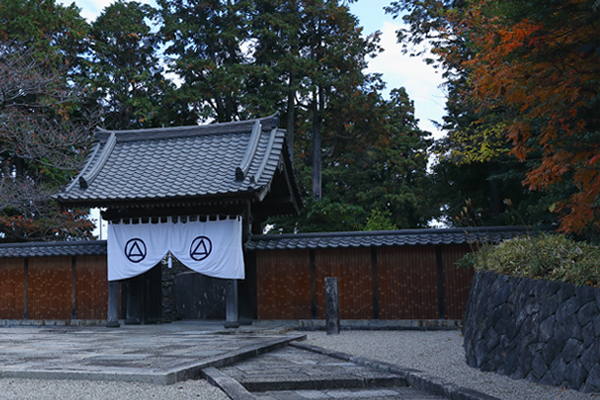
まず、エントランスとなるのが室町時代に建てられた明月門。室町時代の禅宗様式を纏った建築物は力強さと落ち着きをもって来館者を迎え入れる。
門をくぐった先では、大官大寺で使われた瓦と伝承される断片が、官寺のなかでも最高位の寺であったという品格を偲ばせている。
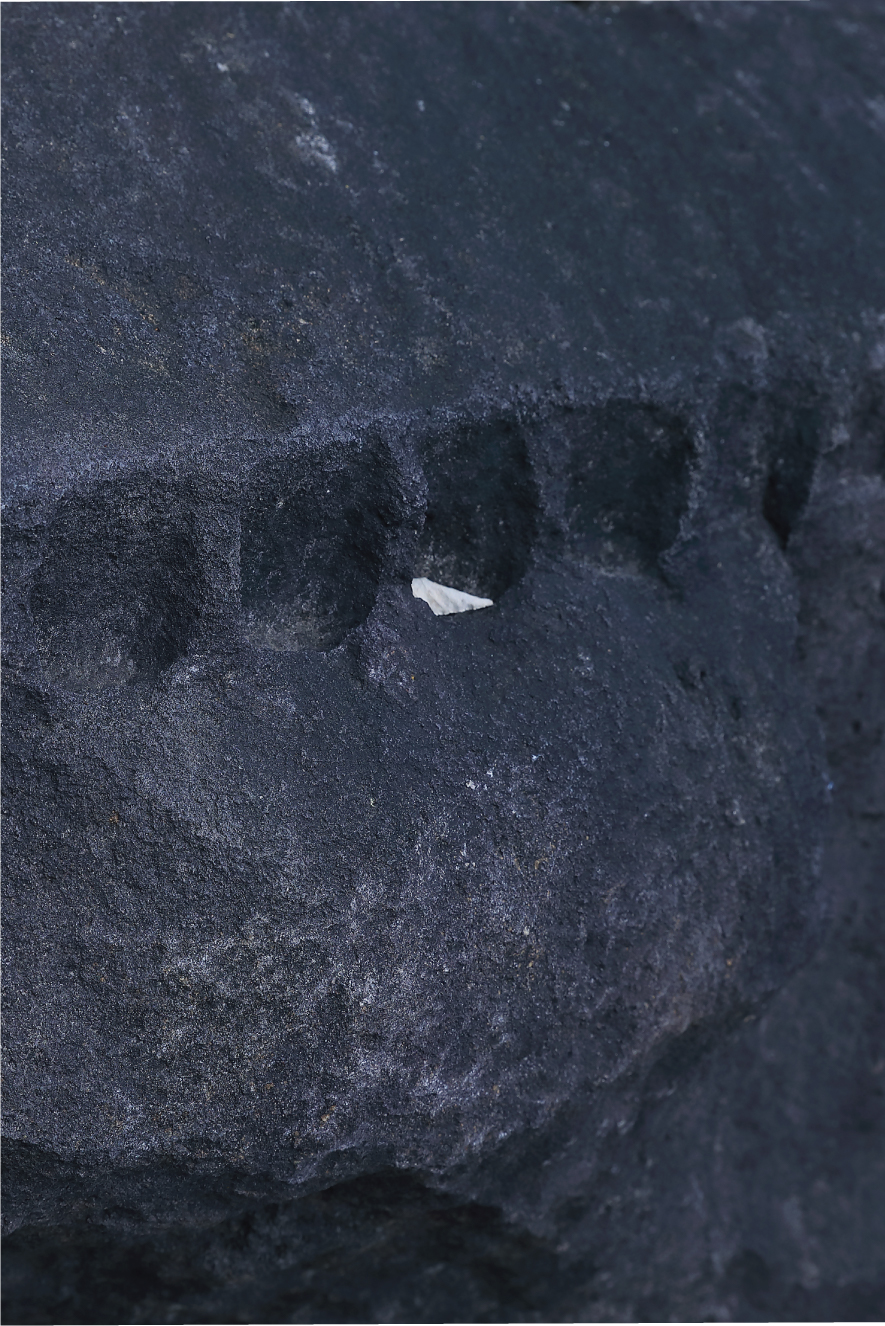
先にある「夏至光遥拝100メートルギャラリー」に沿って歩けば、存在感ある姿で据えられた川原寺の礎石が置かれている。これは天智天皇の時代に建立されたと思われるものだ。
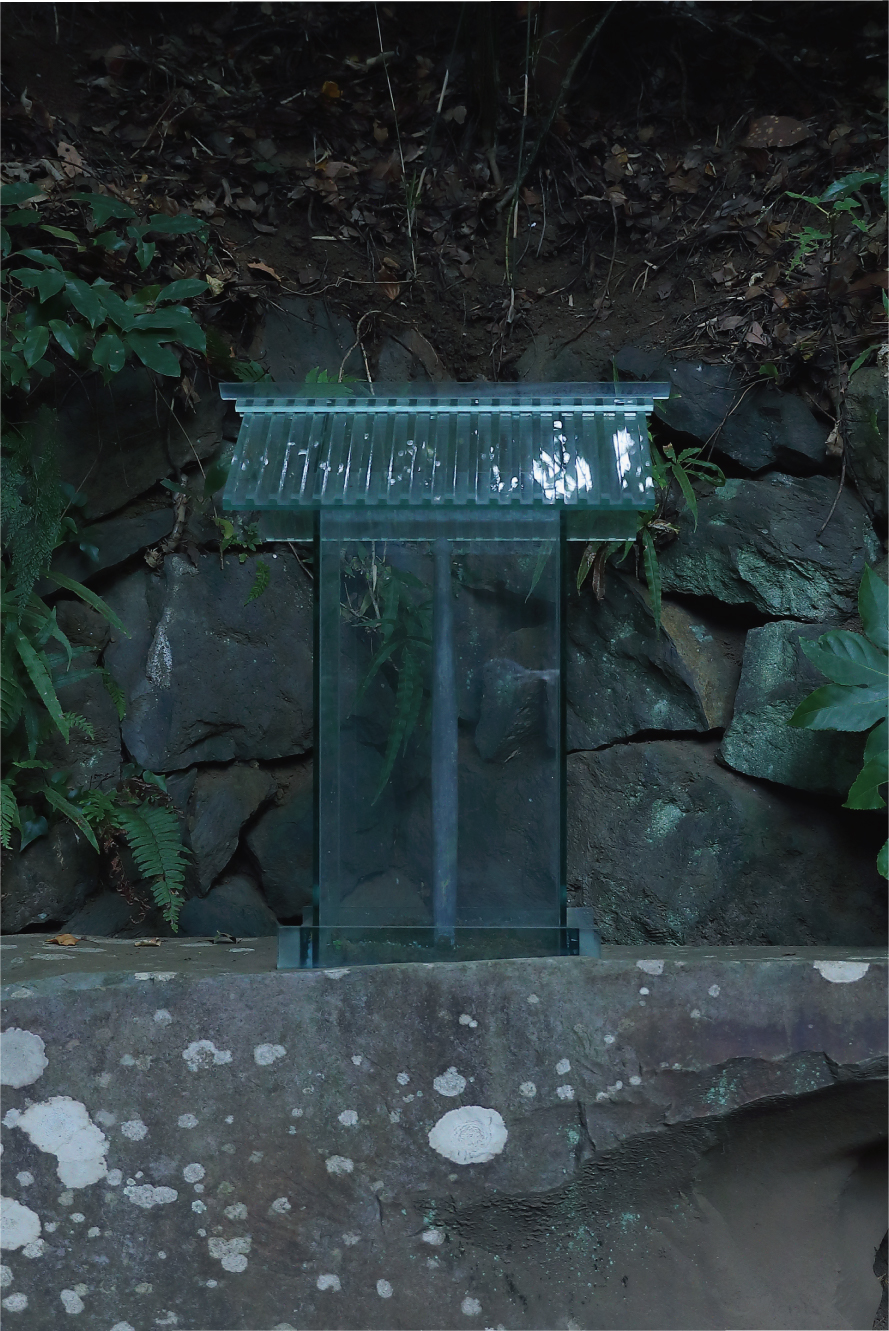
さらに歩を進め「光学硝子舞台」からぐるりと周って坂を下る。小径を行くうちに「榊の森」へ。ここでは細見古香庵が長年集めてきた石仏たちが、小径の脇に並び柔らかな影を連ならせている。それぞれの表情は柔らかく、苔むした頬の曲線やわずかな欠けに、ひとつずつが異なる土地の祈りを静かに宿しているようだ。
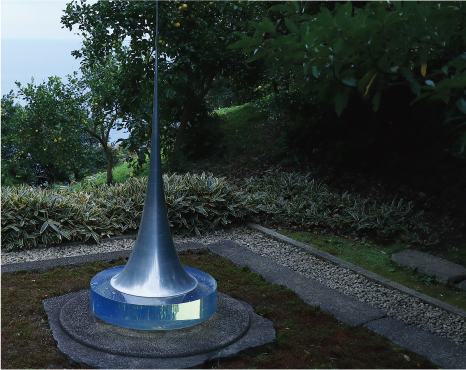
「榊の森」を抜けると5億年前の化石などが陳列された「化石窟」、側には縄文時代の後期のものといわれる石棒が供えられ、遥か昔の祈りがほのかに感じられる。ここから竹林へ向かう。途中に現れる、杉本博司氏の作品「数理模型0010 負の定曲率回転面」の抽象的な造形が、自然の風景に理知的な違和感を生みだしている。
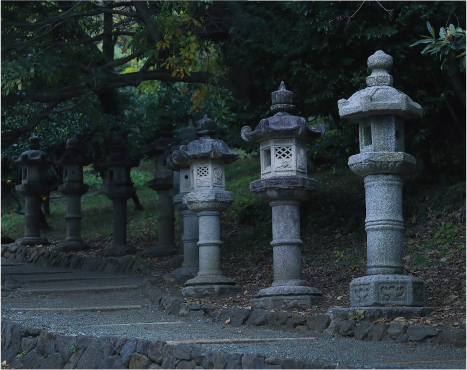
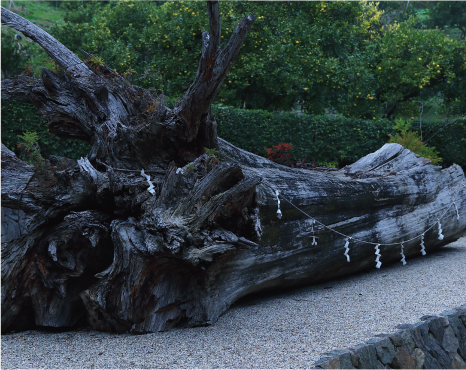
さらに進めば、道の脇に鎮座する「樹齢400年の春日杉」や「甘橘山春日社」へ続く参道では58基の燈籠に迎えられる。
「榊の森」から坂道を上がっていく。途中、遊歩道にぽつんと、桃山時代のものと思われる隠れキリシタン地蔵像が置かれている。背面には十字架らしきものが刻まれている。
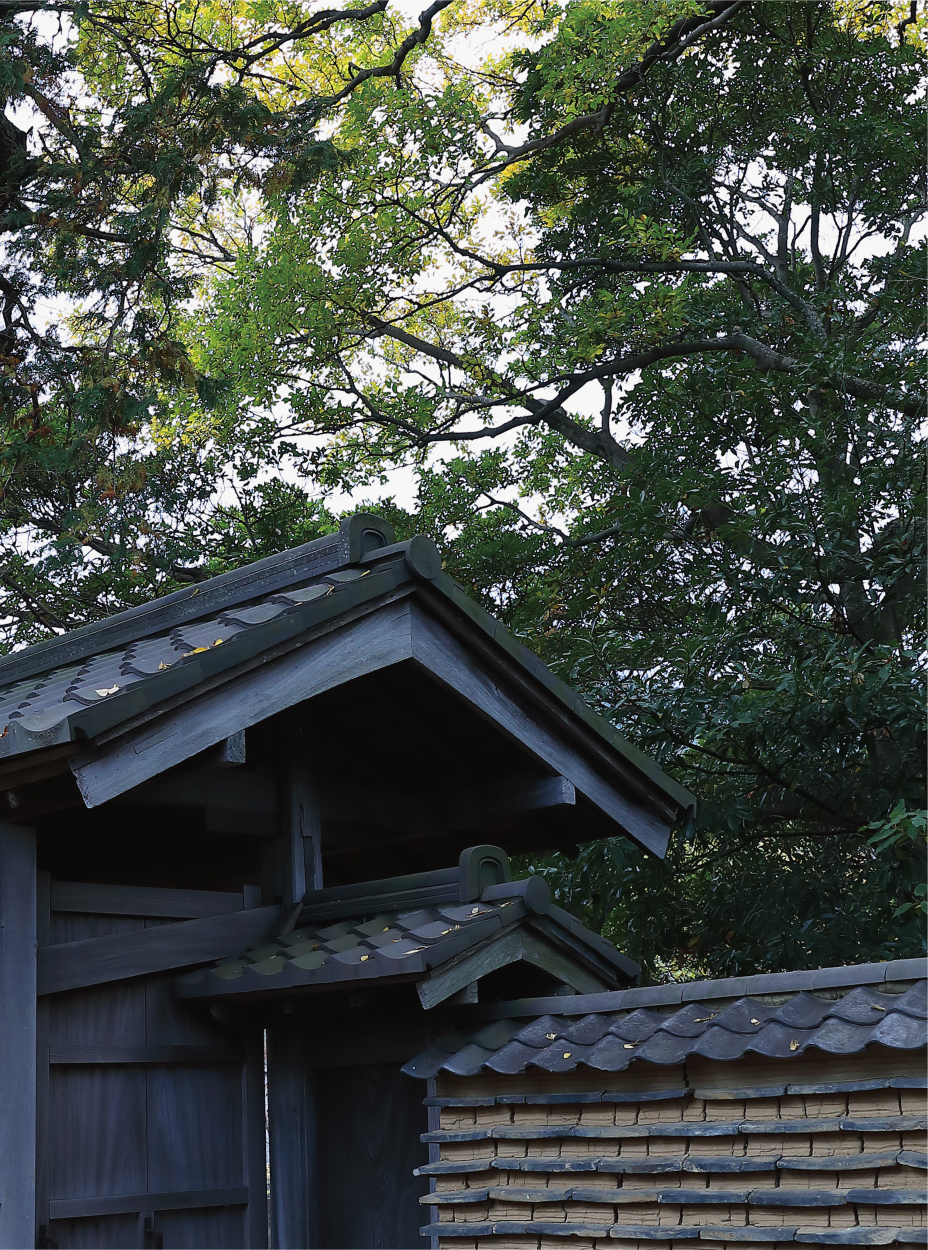
そこから石造鳥居を抜けた先で、木組の気配が空気を変える。大正〜昭和初期に造られた名旅館「奈良屋」の別邸に至る門が移築され、静かに佇んでいる。
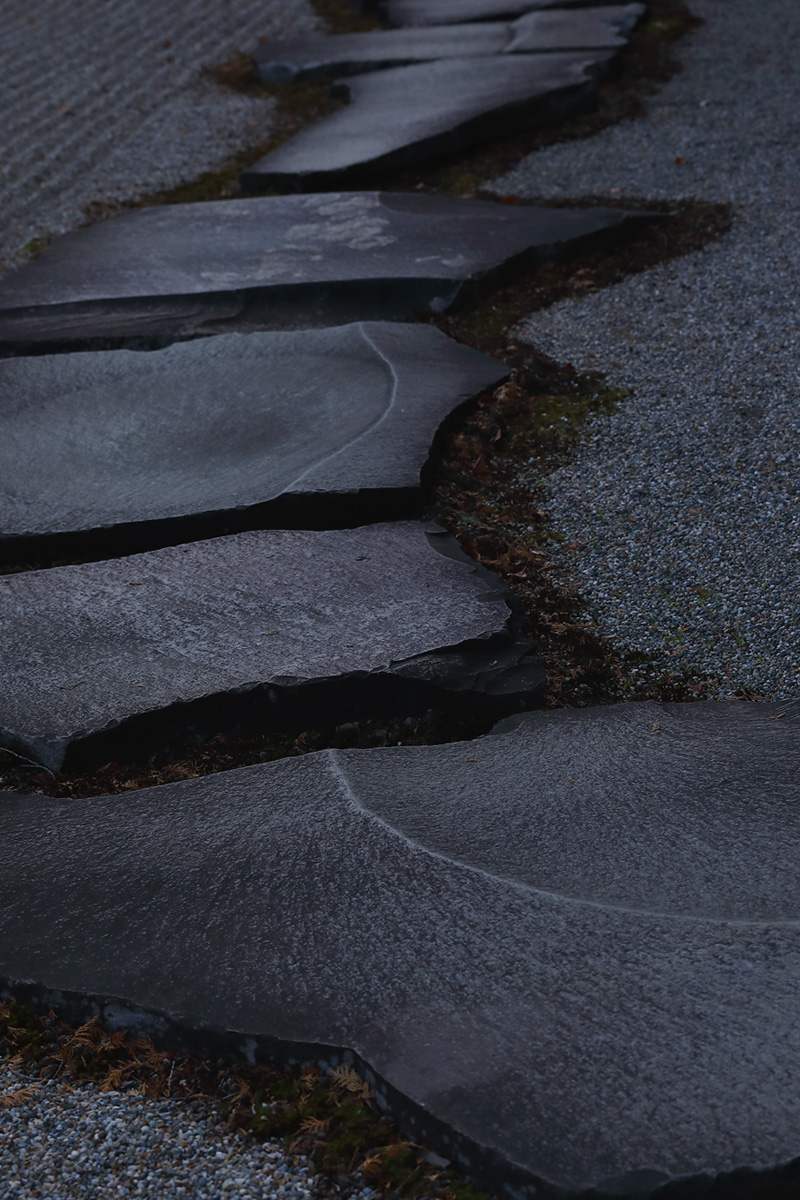
鳥羽天皇の勅願により平安末期に建立された内山永久寺の十三重塔を過ぎれば「夏至光遙拝100メートルギャラリー」エントランスへと辿り着く。ここには京都の市電の軌道敷石として使われた石があり、近代の街の記憶が古代の石や平安時代の石の塔と同じ空気の中へ溶け込んでいく。
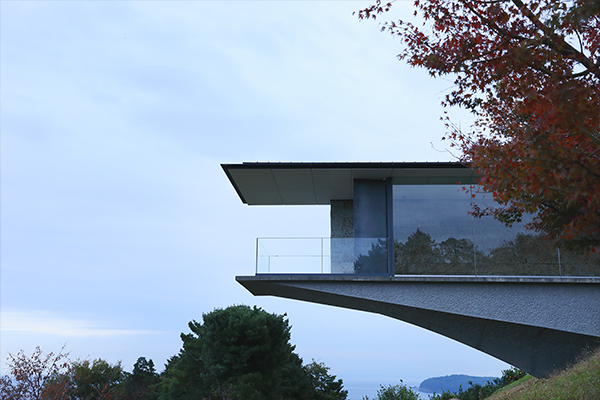
江之浦測候所を歩くと、時代は線ではなく、レイヤーの集合体であると気づいた。風が触れると、その層は揺れ、重なり、移ろいながら、海へ向かう斜面でひとつの風景として結ばれていく。
Layers of Time
Walking the site, I reflect on the passage of various eras.
At Enoura Observatory, time seems to exist not as a single line, but as multiple layers. It is a collection of fragments that would normally never intersect—ancient stones, medieval pagodas, Edo-period lanterns, and modern city paving stones. They form a single landscape together with the light and wind. Walking through this is not about going back or forward in time, but experiencing drifting between the layers.
Walking through the grounds, various eras quietly reveal themselves—not as rigid history, but as a faint presence. “Meigetsu gate”, built in the Muromachi period, welcomes visitors with the powerful yet calm atmosphere of its Muromachi-style Zen architecture.
Beyond the gate, roof tile fragments—said to be from Daikandai-ji Temple —seem to evoke the dignity of what was once a top-ranking state temple.
Along the “Summer Solstice Light-Worship 100-Meter Gallery” a Foundation Stone from Kawahara-dera Temple sits with a strong presence. It is thought to have been established during the reign of Emperor Tenji.
Moving past the “Optical Glass Stage” into the Sakaki Forest, stone Buddhas line the path in soft shadows. Their gentle, mossy faces and slight chips seem to quietly harbor the prayers of different lands.
Emerging from the Sakaki Forest, the “Fossil Cave” displays 500-million-year-old fossils alongside “Stone Rods” said to date from the late Jomon period. Here, one seems to faintly sense the prayers of the distant past before heading toward the bamboo grove.
Along the way, the abstract form of Hiroshi Sugimoto’s “Mathematical Model 0010” appears to create an intellectual dissonance within the natural landscape.
Continuing further, one is greeted by 58 stone lanterns along the approach to the “Kankitsuzan Kasuga Shrine” and the “400-year-old Kasuga Sugi Cedar” standing by the path.
Ascending the slope from the Sakaki Forest, one finds a “Hidden Christian Jizo Statue” from the Momoyama period. What appears to be a cross is carved onto its back.
Beyond a “Stone Torii Gate”, the air seems to change with the presence of wooden joinery. A relocated gate from the villa of the famous “Naraya” stands quietly.
Passing a “Uchiyama Eikyu-ji Temple 13-Story Pagoda”, one reaches the gallery entrance. Here, “Kyoto Tramway Paving Stones” allow modern memories to dissolve into the same air as ancient and Heian-period stones.
Walking here, I realized that time is not a line, but a collection of layers. As the wind brushes by, these layers seem to sway and overlap, uniting as a single landscape on the slope facing the sea.

閲覧中の特集はこちら