












バリ島編
dumplings|2026.6.24
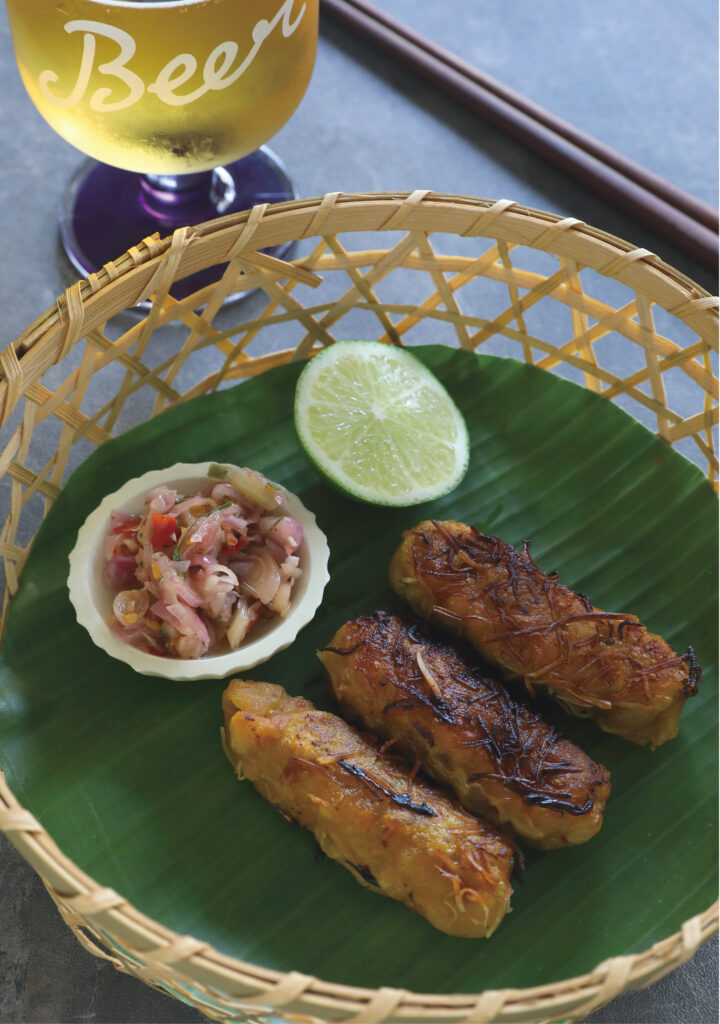
「旅する餃子」サテ餃子 サンバル・マタを添えて~バリ島編。
海の匂いに、花と線香の香りとガムランの音が混ざる島。
祈りが暮らしに静かに息づき、水が棚田を豊かに潤していく。
甘く、辛く、香ばしい、南国の味。
さて今回は、バリの熱と香りを餃子に包んでいく旅。
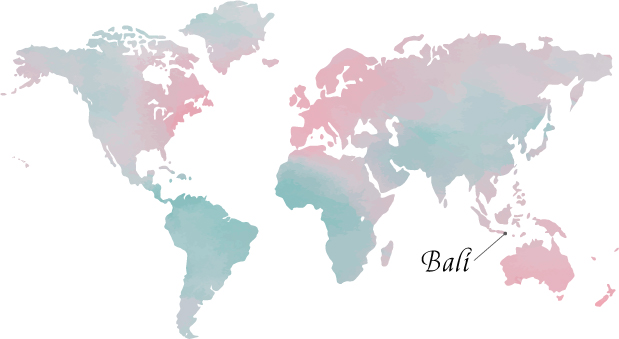
神々の島に息づく、祈りと水の食文化。
バリ島に着くと、まず空気の濃さに驚く。海の匂い、花の匂い、線香の煙、どこかから聞こえるガムランの音。南国のリゾート、というひと言で片づけるには、あまりにもいろいろなものが混ざり合っている。
道を歩けば、店先や家の前に小さな供え物が置かれている。椰子の葉で編んだ器に、花や米や菓子をのせた「チャナン・サリ」。それは日々の暮らしのなかにある祈り。バリでは、神さまは寺院だけにいるのではない。家にも、道にも、田んぼにも、海にも、気配として息づいている。朝の光の中で供え物を置く人の所作を見ていると、この島では一日が、祈りから始まるのだと思えてくる。
そのバリらしさを象徴するもののひとつが、棚田を潤す水の仕組み「スバック」。9世紀頃に起源をもつとされるもので、田んぼ、寺院、人びとの暮らしがひとつにつながっている。単なる農業システムではなく、神、人、環境の調和を大切にする「トリ・ヒタ・カラナ」の考えを映した文化として、ユネスコ世界遺産にも登録されている。水が田を満たし、稲を育て、やがて食卓へたどり着き、バリの暮らしを支える。
その土地で生まれる料理もまた、祈りと暮らしの延長にある。スパイスをすり潰し、香味野菜を刻み、肉や魚になじませる。甘く、辛く、香ばしい。そんな島の味を、今回は餃子の皮の中に旅させてみる。
On the island of the gods, a food culture shaped by prayer and water.
is too richly layered to be just a tropical resort. On every street, you see canang sari—small daily offerings of flowers and rice. In Bali, gods dwell everywhere: in homes, roads, and fields. Each day begins with prayer.
A symbol of this identity is Subak, a 9th-century water management system for rice terraces. This UNESCO World Heritage site reflects Tri Hita Karana—the harmony between God, humans, and nature. Water sustains the rice, and the island’s cuisine expands on this lifestyle. Spices are ground and vibrant herbs are chopped. Today, we wrap these sweet, spicy, and savory tastes inside a gyoza.
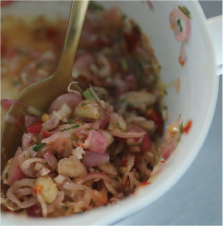
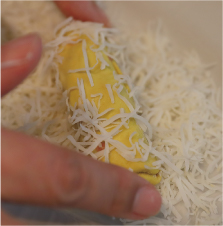
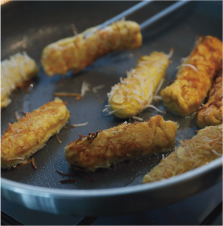
バリの香りと熱を包んだ、サテ餃子。
バリ料理は味の重なりが楽しい。そこにある香りと熱を、餃子の中に包むため、今回はバリの伝統料理「サテ・リリット」を、皮、餡、サンバルの三つの要素で仕立てていく。
では、レシピをご紹介しよう。
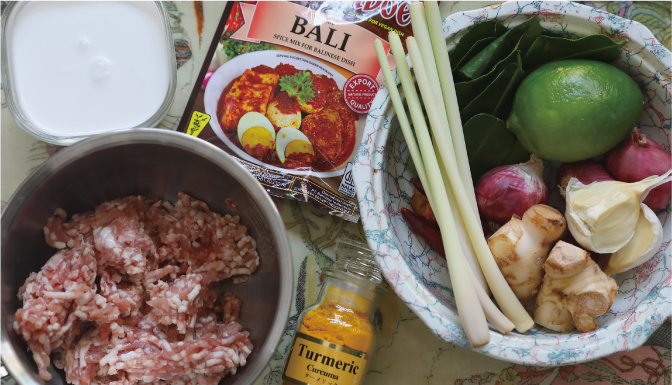
①豚ひき肉、ブンブ・バリペースト、ココナッツフレーク、バイマックルー、きび砂糖、塩をボウルに入れ、粘りが出るまで練り合わせる。
②小麦粉にターメリックパウダー、塩、温めたココナッツミルクを加えて皮をつくる。
③皮で餡を包み、表面を軽く湿らせてから、ココナッツフレークを転がすようにまとわせる。
④フライパンで焼き、皮に香ばしい焼き色をつける。
⑤バナナの葉を敷いた皿に餃子を並べ、サンバル・マタを山盛りに添える。
⑥サンバル・マタは、紫玉ねぎ、レモングラス、唐辛子、ニンニク、テラシを刻んで塩を混ぜ、熱したオイルをかけ、仕上げにライムを絞る。
さて、お味はいかがでしょう?
ココナッツの甘く香ばしい風味、豚肉の旨み、そこにバサ・ゲデのスパイスが立ち上がる。カリッと焼けた皮に、ココナッツの軽い歯ざわり。サンバル・マタの風味と辛みが飛び込んできて、味が一気に南国へ向かう、大満足の逸品。
Satay dumplings wrapped in the heat and fragrance of Bali.
Balinese cuisine thrives on layered flavors. To wrap its heat and aroma, we reimagine the traditional Sate Lilit through three elements: the wrapper, filling, and sambal sauce. Let’s look at the recipe.①Knead minced pork, Bumbu Bali paste, coconut flakes, bimac crew, sugar, and salt until sticky.②Mix flour, turmeric, salt, and warm coconut milk for the dough.③Wrap filling, moisten wrappers, and coat with coconut flakes.④Pan-fry until golden brown.⑤Serve on a banana leaf with plenty of Sambal Matah.⑥Sambal Matah, Mix chopped shallots, lemongrass, chili, garlic, terasi, and salt. Pour hot oil and squeeze lime.
So, how does it taste? Coconut’s sweet aroma, savory pork, and spicy Basa Gede rise up. The crispy wrapper offers a light, crunchy texture. Then, Sambal Matah’s fiery heat and tang kick in, taking your palate straight to the tropics. Pure bliss.
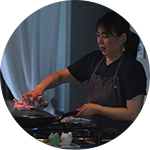
《料理家》 松井まり子 Mariko Matsui
株式会社De-De
Senior Art Director/Graphic Designer/Food Stylist
アートディレクター、フードスタイリストとして活動する傍ら2024年にはDe-De GYOZAもスタート。

webサイト