












夕暮れの京都タワーを、認めてあげて。
Column|2026.11.20
Text_Toshinori Okada
Photo_Toshinori Okada
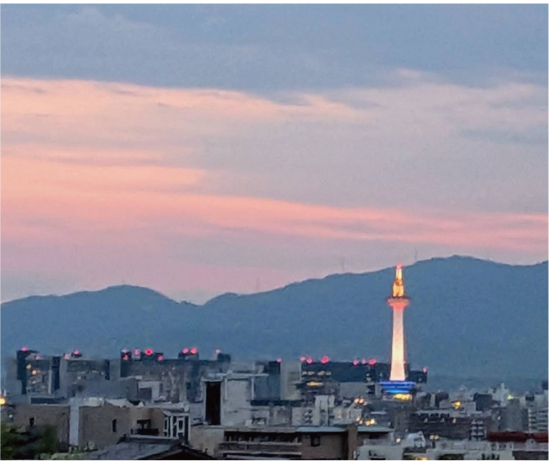
東山のバーで酒を飲んでいた。まだ、夕方。大きな窓の向こうで京都の町が暮れはじめ、その先に京都タワーが立っていた。空の色を映したのか、白い塔はほんのり桃色。山並みを背に、ぽつねんと、少し遠慮がちに佇んでいる。可憐だった。すっごく、京都らしいと思った。
京都タワーは、京都人にあまり好かれていないという。京都在住の知人に尋ねても、いまいちな表情。嫌いと断言するほどでもないが、好きと言うには何かが引っかかっているよう。あれを褒めると、感性が問われると思われるのだろうか。古都の美意識は、なかなか採点が厳しい。
開業は1964年12月。東海道新幹線が走り、東京オリンピックが開かれた年。京都駅前に高さ131メートルの塔を建てる計画は、文化人や建築家を巻き込む大論争になったという。「古都の景観を壊す」、「不細工で低俗」、「商業主義の産物」。ずいぶんな言われようだ。京都では新しいものは、まず一度、きちんと叱られなくてはいけないのかな。
ちなみに、あの姿はよく「和ろうそく」と呼ばれる。しかし、設計上のモチーフは灯台である。周辺の家屋にある瓦屋根を海に見立て、海のない京都を照らす。ただし、ろうそくに見えると言われ続けて六十余年。灯台より和ろうそくの方が、京都らしい。
似た境遇のタワーがパリにある。エッフェル塔だ。1887年、建設が始まると、モーパッサンやデュマ・フィス、作曲家グノー、オペラ座を設計したガルニエらが連名で抗議。「無用で怪物的」「巨大な黒い工場の煙突」とまで罵られた。そもそも20年で姿を消すはずだった。それがいまでは、パリの絵はがきからこの塔を消すほうが難しいだろうに。
しかも京都タワー論争のさなか、擁護派はすでにこう言っていた。「パリのエッフェル塔を見よ、10~20年後の評価を待ってほしい」。先例は最初から提示されていたのである。それから六十余年。京都の時間感覚では、まだ審議中なのかもしれない。さすが千年の都。
けれど東山から見たあの夕暮れの塔は、景観を壊してなどいなかった。暮れていく町のなかで、むしろ自分を小さく見せながら、でも美しく存在している。寺と町家だけを京都と呼ぶなら、たしかに異物だろう。しかし、昭和の京都もまた、京都である。見たいものだけを「京都らしい」とするのは、案外、観光客の発想なのかもしれない。
だから次に京都へ行ったら、駅前で見上げるだけではなく、少し離れた場所から京都タワーを見てほしい。山と屋根と暮色のあいだに立つ姿は、思っていたより細く、可憐で、どこか奥ゆかしい。嫌われても立ち続けた六十余年に免じて——。そろそろ、認めてあげてもいいのかも。
Give twilight kyoto tower a little grace.
I was having a drink at a bar in Higashiyama. Beyond the window, twilight settled over Kyoto, with Kyoto Tower standing in the distance. Reflecting the sky, the white spire turned faintly pink. Standing alone against the mountains, it was charming—and felt so distinctly Kyoto.
Locals supposedly do not care for the tower. Asking friends living here yielded lukewarm faces. They do not hate it, yet hesitate to praise it, as if liking it might question their taste. The ancient capital judges aesthetics strictly.
Opened in December 1964, the 131-meter spire before the station sparked fierce debate: “ruining the landscape,” “ugly,” “pure commercialism.” In Kyoto, anything new must first be scolded.
Though often called a Japanese candle, it was actually designed as a lighthouse, turning tile roofs into a sea to illuminate landlocked Kyoto. Yet after sixty years, the candle image feels far more fitting.
A tower in a similar plight stands in Paris: the Eiffel Tower. In 1887, critics decried it as “useless and monstrous.” Built to be temporary, today a Paris postcard without it is unthinkable.
Kyoto Tower’s defenders cited this precedent: “Look at the Eiffel Tower; wait twenty years.” Yet sixty years later, in Kyoto’s sense of time, deliberation continues. Such is the ancient capital.
Viewed from Higashiyama at dusk, the tower hardly ruins the landscape. Softening in twilight, it stands quietly beautiful. Showa-era Kyoto is no less real than ancient temples; narrowing Kyoto to expectations is a tourist’s mindset.
View the tower from afar next time. Standing between mountains, roofs, and twilight, it is surprisingly modest. After sixty years, perhaps it is time to grant our approval.
夕暮れの京の風景に、すっかり馴染んだ京都タワー。