











なぜ、ヨーロッパの人々はスペインに恋焦がれるのか。そして、世界中を魅了するのか。
Column|2026.6.23
Text_kotaro sakata
Photo_kotaro sakata
アントニ・ガウディの没後100年にあたる今年2026年にサグラダ・ファミリアのメインタワー「イエス・キリストの塔」が完成した。この大偉業により大聖堂の外観は大きなマイルストーン(節目)を迎えた。今後2027年以降になると思われるが、メインエントランスとなる「栄光のファサード」の建設が本格化し、あくまでも予定ではあるが、2034~2035年に内部装飾など、最終的にすべての装飾や付属建築物が完成し、完全なグランドオープンを迎えようとしている。
バルセロナのサグラダ・ファミリア主任彫刻家である、外尾 悦郎氏(1953年- )に、私の代わりに友人がランチで取材をしてくれた。外尾 悦郎氏いわく、彼は、石の声がわかると言う。突拍子もない言葉に聞こえるかもしれないが、ガウディ亡き後、サグラダ・ファミリアの設計図も散逸し、スケッチもなく、写真もほぼ残されていない。戦争がいかに無垢な遺産を破壊し、人の心と身体から救済を取り去ってしまったのか。嘆かわしく、愚かである。戦争は 、まさに愚行であると断言できよう。しかし、戦争を起こしたのも人間であり、再建し、人を救うのも人間であるのも事実である。己の中にも矛盾するコインの表裏が同居しているかと思うと、外尾 悦郎氏の言葉を思い出さずにはいられない。
そう、スペインは、バルセロナだけではなく、ヨーロッパ人が憧れる土地であった。古今東西の音楽、絵画、彫刻芸術家が、この地を目指しスペインからインスピレーションを得ていた。
例を挙げると、ビゼー作曲でフランスを代表するオペラ・コミックの金字塔《カルメン》は、アンダルシア地方、セビリアの煙草工場が舞台である。イタリア王国が建国される前にイタリア半島中を席巻した、作曲家ロッシーニは、オペラ《セビリヤの理髪師》を書いた。その以前にモーツァルトは、オペラ《フィガロの結婚》でこの地を舞台にした連続物語をオペラ化している。時系列的には、フランスの劇作家、ボーマルシェが書いたフィガロ三部作の第2作目《フィガロの結婚》が先に創られ、そのモーツァルトの生まれ変わりを自称した、ロッシーニが、その前作の《セビリアの理髪師》をモーツァルトへのオマージュとして作曲したので、原作順と作曲順が入れ替わっているので、間違いやすい。
文学では、中世の騎士道物語のセルバンテス著『ドン・キホーテ』はマドリードやラ・マンチャ地方が舞台であり、バルセロナが舞台のカルロス・ルイス・サフォン著『風の影』や、パンプローナの牛追い祭りを描いたアーネスト・ヘミングウェイ著『日はまた昇る』も有名である。
思い起こせば、フン族がヨーロッパ東北地方から西に移動し、押し出されるように、ゲルマン民族が、ヨーロッパ中に移動し、今のドイツ、フランス、北イタリア半島に移動してきた訳であり、その後、神聖ローマ帝国をハプスブルグ家が血縁の力を使って納めるとその勢力はついにスペインへと食指を伸ばし、結果的に魅惑の地『スペイン』をめぐり、スペイン継承戦争にまで発展する。今では、世界中に交流・交通が発達すると、チョークポイント(海運、交通上の重要な狭所)が狙われている。スペインが今のまま平和であり続けてくれるように、対岸と思わずに、世界的視野で物事をとらえていきたいと願う。
Why do Europeans long for Spain? and why does it captivate the world?
In 2026, the centenary of Antoni Gaudí’s death, the main “Tower of Jesus Christ” at the Sagrada Família was completed, marking a major milestone for the cathedral’s exterior. From 2027, construction on the main entrance, the “Glory Facade,” will begin. All final decorations and auxiliary structures are scheduled for completion around 2034–2035, leading to the grand opening.
A friend of mine interviewed Etsuro Sutoo (1953–), the chief sculptor, over lunch. Sutoo said he can “hear the voice of the stone.” This might sound abrupt, but after Gaudí’s death, blueprints were scattered and photos vanished. War tragically destroys innocent heritage, stripping salvation from human hearts. War is pure folly. Yet, while humans start wars, humans also rebuild and save others. Realizing these two contradictory sides of a coin coexist within us brings Sutoo’s words back to mind.
Indeed, Spain, not just Barcelona, has long been a land of longing for Europeans. Musicians, painters, and sculptors from all times and places have headed to this land, drawing endless inspiration from Spain.
For instance, Bizet’s Carmen is set in a Seville tobacco factory. Rossini, who dominated the Italian peninsula, wrote The Barber of Seville. Before that, Mozart adapted The Marriage of Figaro, setting this sequential story in the same land. Chronologically, Beaumarchais’s second play, The Marriage of Figaro, was composed first by Mozart. Later, Rossini, claiming to be Mozart’s reincarnation, composed the prequel, The Barber of Seville, as an homage. Because the creation reversed the original play’s order, it is easily confused. In literature, Cervantes’ Don Quixote is set in La Mancha. Carlos Ruiz Zafón’s The Shadow of the Wind captures Barcelona, and Hemingway’s The Sun Also Rises depicts Pamplona’s bulls.
Historically, the migration of Germanic tribes led the Habsburgs to rule the Holy Roman Empire and extend their reach to Spain, triggering the War of the Spanish Succession. Today, global transit highlights vulnerable chokepoints. Praying that Spain remains peaceful, we must view these global issues not as distant troubles, but with an international perspective.
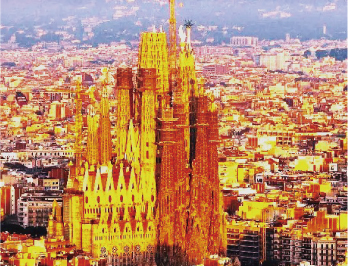
夕日に照らされてバルセロナの街の
ランドマークとしてそびえる
サグラダ・ファミリアの外観。
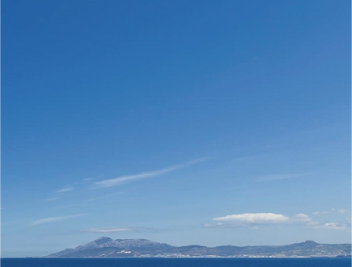
大西洋から、狭小地である
ジブラルタル海峡へ入る際の
スペイン対岸モロッコが眼前に迫る。