












デパートは、街の顔だった。
Column|2026.7.27
Text_Toshinori Okada
Photo_Toshinori Okada
西武渋谷店が閉まると聞いて、渋谷の街角が暗くなる気がした。百貨店がひとつなくなるだけでしょう、と言われれば、まあそうである。でも、自分にとって西武は、買い物をする場所というより、東京の文化を吸収する場所だった。
80年代の東京の魅力のほとんどは、西武が発信していた。広告はいつも先を歩いていて、こちらはその後ろを追いかけ、横文字職業に憧れた。パルコがあり、ロフトがあり、シード館があった。服を見て、本を立ち読みして、よくわからない展覧会や演劇を観て、最後に喫茶店で、受け売りの情報をさも自分のもののようにして喋りながら、驚くほど高い都心価格の
コーヒーを無理して飲む。若さとは、だいたいそういう恥ずかしいものだ。
そこへ、ハンズ渋谷店まで営業を終えるという。ネジも、紙も、変な形のフックも、誰が買うのかわからない道具も、あそこでは妙に立派に見えたもんだ。
渋谷には、用のないものを見に行く楽しさがあった。いまはどうだろうか。再開発の途中ということもあって、中途半端な感じがする。寄り道したくなるような場所も、ずいぶん減ったように思う。
一方で、デパート発祥の地とされるパリは元気だ。ギャラリー・ラファイエットは、相変わらず天井まで見せ場にし、プランタンは建物ごとおしゃれ。世界初の近代デパートとされるボン・マルシェは、老舗という言葉に甘えず、今の店でいようとしている。
そしてサマリテーヌである。あの建物に入ると、まず見上げる。アール・ヌーヴォーの装飾、階段、光の入り方。商品より先に、建物にうっとりする。もちろんLVMHの傘下で資金力があるのだろう。だが、そのお金を何に使うかで、街の様子はずいぶん変わる。
東京だって、負けていたわけではない。少なくとも渋谷は、買い物の街である前に、気分を買いに行く街だった。少し背伸びをして、無駄遣いもかまわず、ブランド品を買い、紙袋は家に帰ってからも捨てない。あの紙袋には、夢や憧れが人っていた。
デパートはただの大きな店ではない。街が自分をどう見せたいか、その見栄がいちばんわかりやすく出る場所だ。渋谷はこれから、どんな顔を見せるのだろう。用もないのに寄りたくなる、そんな渋谷になってくれることを願う。
The department store was the face of the city.
Hearing about Seibu Shibuya’s closure made me feel as if the city’s corner were growing darker. To me, Seibu wasn’t just a place to shop; it was where I absorbed Tokyo’s creative culture.
In the ’80s, Seibu drove Tokyo’s charm with cutting-edge ads. We eagerly chased after them through Parco and Loft, browsing fashion, watching obscure exhibitions, and sipping overpriced coffee while talking big. Now, with Tokyu Hands also closing, those days feel further away. Hands was a treasure trove that made ordinary tools—screws, paper, and odd hooks—look incredibly special.
Shibuya used to be a place to discover the useless yet fascinating. Today, amidst ongoing redevelopment, that playful spirit feels lost. The spots that make you want to wander and linger are fading away.
Meanwhile, Paris, the birthplace of department stores, remains vibrant. Legendary shops like Le Bon Marche and Samaritaine refuse to rely on heritage, captivating visitors with modern Art Nouveau decor and light. How a city uses its wealth on these spaces changes everything.
Tokyo was never lagging behind. Shibuya, at least, was a place where people bought a mood rather than just items. We stretched our budgets, bought brand products, and saved the paper bags even after returning home because they held our dreams.
A department store is not just a big shop; it shows how a city wishes to project itself. I wonder what face Shibuya will show next. I hope it becomes a place where people want to wander, even without a purpose.
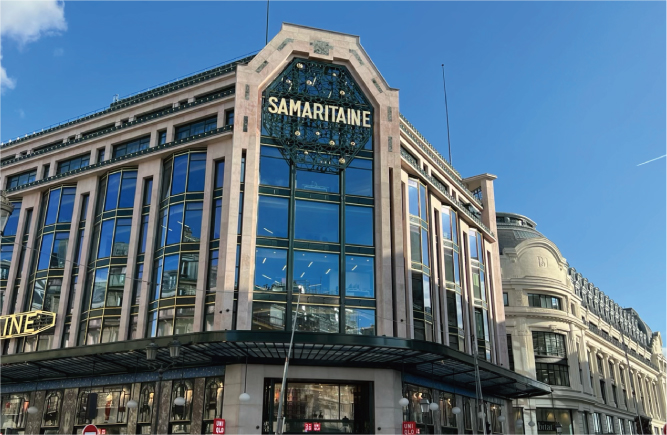
サマリテールのファサード。美しく、威厳がある。
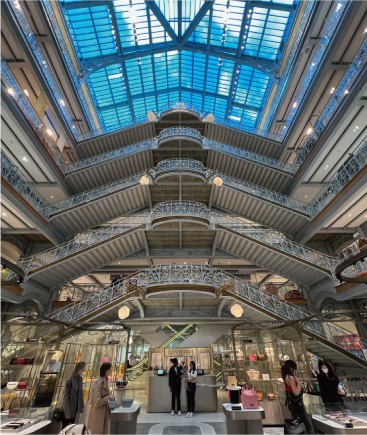
中に入ったら、まず見上げて、うっとり。
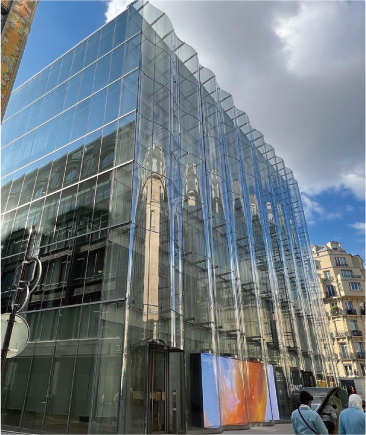
日本の建築家ユニット、
SANAAが手がけたリヴォリ通り側のファサード。