












東京駅は、アムステルダムの夢を見たか。
Column|2026.6.23
Text_Toshinori Okada
Photo_Toshinori Okada
東京駅の丸の内駅舎を見るたびに、どこかで見たぞ、と思う人がいる。その“似た顔”として、よく名前があがるのがアムステルダム中央駅。赤煉瓦の外壁、白い石の縁取り、横に長く伸びた駅舎。確かに似ている。
では、東京駅がアムステルダム中央駅を真似たのか。それがそう簡単には言い切れない。アムステルダム中央駅の完成は1889年。東京駅の丸の内駅舎の完成は1914年。アムステルダム駅のほうがだいぶ先輩。
東京駅を設計したのは、日本近代建築の大物、辰野金吾。アムステルダム中央駅の設計は、オランダの建築家ピエール・カイペルス。ふたつは似ているが、建築様式まで同じではない。東京駅は、赤煉瓦と白い石材を組み合わせた、いわゆる辰野式の表情を持つ。アムステルダム中央駅は装飾が濃く、ゴシックやルネサンス趣味が混じる、ちょっとうるさいデザイン。
つまり、ふたりは親子というより、遠い親戚といったところか。それでも、この“似ている問題”が長く語られてきたのは面白い。
東京駅は、日本が近代国家になろうとしている時代につくられた。海外の都市には、立派な中央駅がある。ならば東京にも、首都の玄関にふさわしい顔が必要だ。そんな気分があったはず。
アムステルダムをそのまま写したというより、ヨーロッパの中央駅が持っていた威厳や華やかさが欲しくて、それを辰野金吾が愚直に、生真面目に、カタチしたのではないだろうか。
考えてみれば、日本にはこういう建物があちこちにある。海の向こうの建築に憧れ、真似て、少し間違えたりもして、でも多くの人に愛される。ハウステンボスにはオランダの街があり、志摩にはスペインの風が吹き、福島の山中には英国風の館が立つ。姫路には本物の姫路城があるのに、ドイツの白い城まである。なぜそこまで、と思うけど、どこも楽しい。
海外建築の模倣というと安っぽく聞こえる。でもそこには、見たことのない国への憧れがある。近代への背伸び、観光地としてのサービス精神、ときには、ちょっとした見栄もある。
東京駅とアムステルダム中央駅も、本物と偽物という話ではない。似ている、けれど同じではない。真似たようで、真似しきれていない。そこに建築、そしてデザインが国境を越えたときの面白さがある。
東京駅は、アムステルダムの夢を見たのか、見なかったのか。そんなことには関係なく、今日も丸の内の赤煉瓦の前では、多くの観光客が行き交っている。
Did Tokyo Station dream of Amsterdam?
Many see a striking resemblance between Tokyo Station and Amsterdam Centraal. Both feature red-brick facades and white stone accents. But did Tokyo copy Amsterdam?
It is not that simple. Tokyo Station, designed by Kingo Tatsuno, features his signature style with clean white stone bands. Meanwhile, Amsterdam’s station, completed earlier by Pierre Cuypers, heavily blends Gothic and Renaissance designs.
They are distant relatives rather than parent and child. Yet, this resemblance has intrigued people for generations. Tokyo Station was built when Japan was striving to become a modern state. A grand central station was essential to serve as the worthy face of the nation’s capital.
Kingo Tatsuno likely sought the grandeur of European stations, shaping it with earnest precision rather than directly copying Amsterdam.
Come to think of it, Japan is full of such buildings. We admire foreign architecture, mimic it, sometimes make slight mistakes, yet these places become deeply loved. Huis Ten Bosch recreates a Dutch town, Shima catches a Spanish breeze, and a British manor stands in Fukushima. It makes you wonder why, but they are all fun.
Behind this lies a pure longing for unseen lands—a stretch toward modernization and tourism hospitality. The relationship between Tokyo and Amsterdam stations is not about real versus fake. They are similar, yet unique. That is the joy of design crossing borders. Today, crowds of travelers continue to pass by the red bricks of Marunouchi.
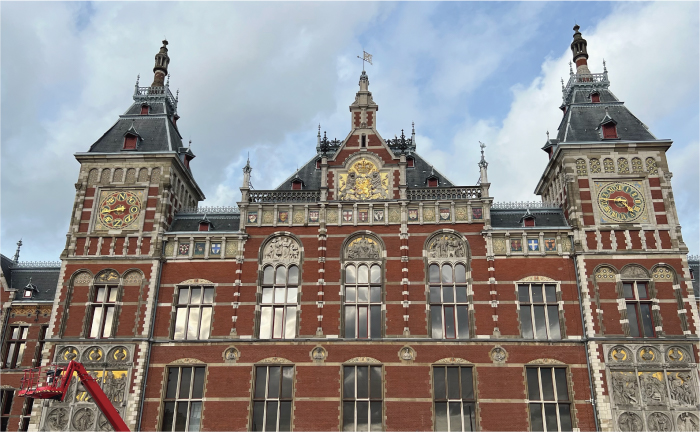
アムステルダム中央駅、ヨーロッパらしい煌びやかさがある。
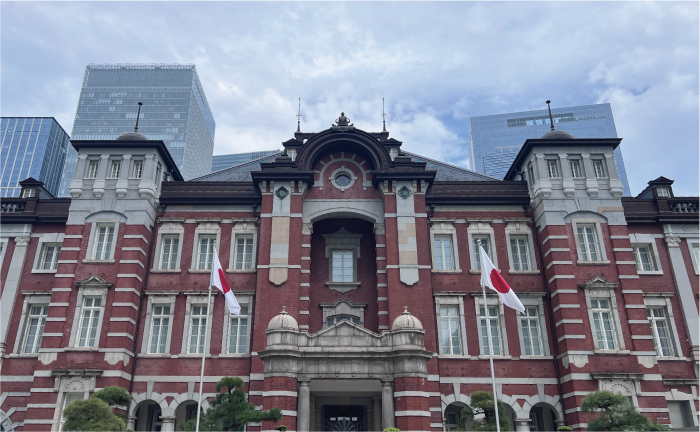
東京駅 丸の内駅舎、奥ゆかしさを感じるデザインだ。