












エジプト編
dumplings|2026.3.23
「旅する餃子」エジプト編。
砂漠の国を潤すナイルの恵みと、五千年育まれた豆とパンの食文化。
生命を包む知恵を、今度は餃子で表現してみる。
さてさて、ナイルの味はうまく包み込めるか?
砂漠に生まれたナイルの恵みの食文化。
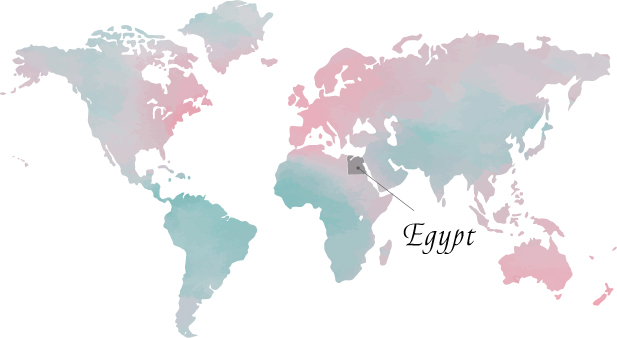
エジプトという国を一言で説明すると、「ほぼ砂漠」。国土の約95%が乾いた大地に覆われている。雨はめったに降らない。では人はどこで暮らしているのか。答えは簡単、ナイル川のまわり。地図を見ると、ベージュ色のなかに細い緑の帯が一本。そこに、人口のほとんどがぎゅっと集まっている。なかなか苛酷な環境条件だ。
しかし、その一本の緑の帯に、水が流れ、土が潤い、畑が息づく。乾いた世界のなかで、そこだけがやわらかな潤いに満ち、人の生活が連綿と続いてきた。だから古代文明も都市も、みんな川沿いに並んだ。ピラミッドも神殿も有名だけど、毎日の暮らしを支えてきたのは、日常にある畑や台所。文明は、意外とキッチンから生まれるものなのかも知れない。
エジプトでは、食卓に並ぶのは豆料理が中心。フールという煮込み豆、ターメイヤという豆のコロッケ。肉は控えめ、野菜と穀物が主役。質素なのに腹持ちがよく、食べ終わるころにはなぜか満足している。派手さはないが、底力がある。そして忘れてはいけないのがアエーシというパン。アラビア語で「人生」という意味らしい。パンが人生。なるほど、三食これなら確かにそう言いたくもなる。料理をのせたり、すくったり、ちぎって分けたり、包んだり。
そして、中東には、具材を包んだ三角形の包み揚げ「サンブーサ」がある。この料理を餃子へ引用しようというのが、今回の旅する餃子。できあがりは、どこかエジプトの屋台の匂い。遠い国の知恵が、餃子というかたちでひょいと食卓に現れる。旅気分とは、案外こういう軽やかな一口から始まるのかもしれない。
A food culture born of the Nile’s bounty in the desert.
To describe Egypt in a word: desert. With 95% of the land covered in arid earth, life clings to the Nile—a thin ribbon of green amidst the beige. While the pyramids are iconic, it is the daily labor in the fields and kitchens that has sustained this civilization for millennia. Perhaps civilization itself is born in the kitchen. The Egyptian table is defined by beans: ‘ful’ stews and ‘ta’ameya’ (bean croquettes). It is a humble, meat-light diet that is surprisingly satisfying. At the center is ‘aish’—bread that literally means ‘life’ in Arabic. It is used to scoop, wrap, and share every meal.
In this edition of ‘Gyoza cuisine,’ we draw inspiration from the Middle Eastern ‘sambusa,’ a stuffed fried pastry. The finished dumpling carries the aroma of an Egyptian street stall, bringing the wisdom of a far-off land to your table. A true sense of travel can begin with just such a light, flavorful bite.”
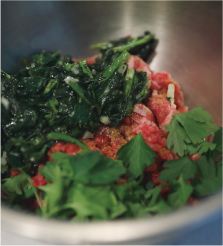
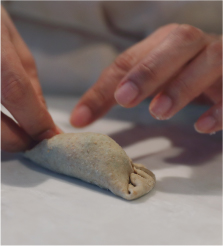
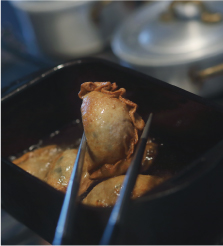
ナイルの恵みを包み込んで、サクッと揚げる。
今回の餃子のコンセプトは「ナイルの恵みを包み込む」。その昔、重病に倒れた王を救ったとされる、モロヘイヤを使った「王様のスープ」。そのとろみと栄養を餡のつなぎに活用した。また、「包む」という行為にある、食材への敬意と保存の知恵を宿した、アエーシの包容力をサクサクの皮で再現する。
では、レシピを紹介しよう。
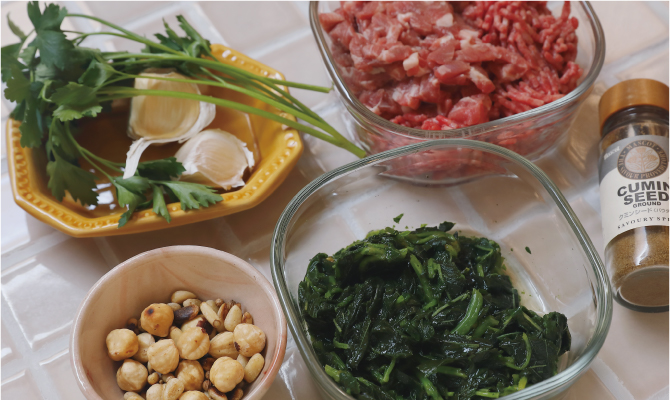
①牛挽肉、ラム肉、モロヘイヤ、ニンニク、パセリ、クミン、コリアンダー、岩塩を混ぜ合わせる。
②小麦粉、水、塩、クミンシード、油を混ぜ合わせ皮を作る。
③餡を皮で三日月状に包み、サクサクになるまで揚げる。
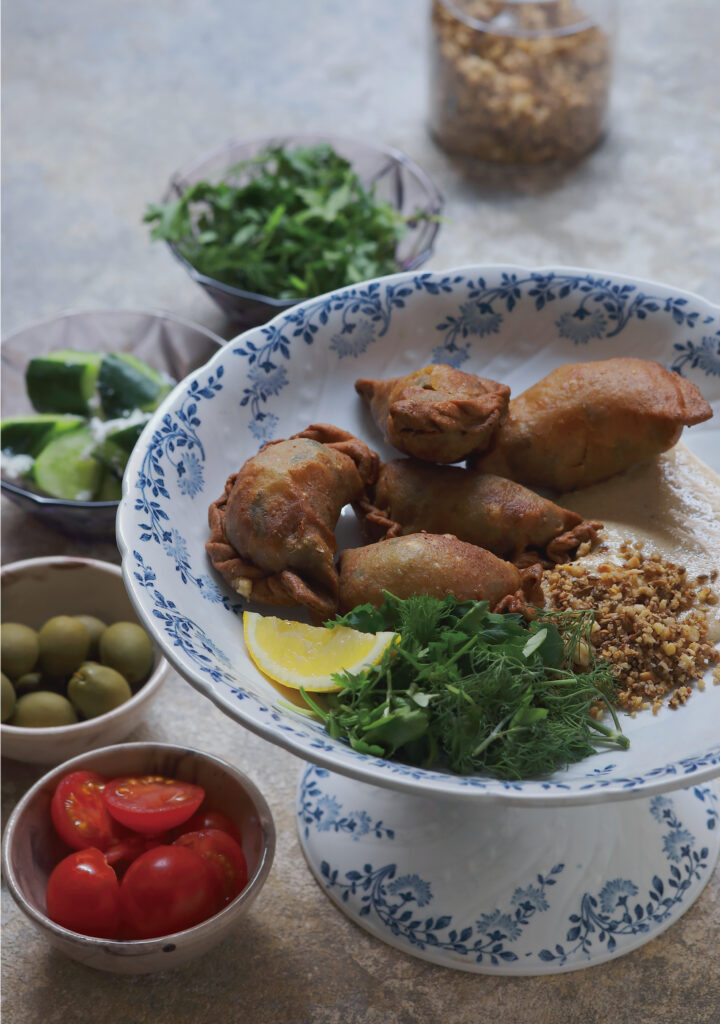
④盛り付ける:白ごまペーストにレモンとニンニクを効かせた「タヒーナ」と、ナッツとスパイスを砕いた「デュカ」をサイドに。たっぷりのフレッシュハーブ(パセリ、ディル、コリアンダー)を添えて、餃子を盛り付ける。
<デュカの作り方>
ヘーゼルナッツ、松の実、コリアンダーシード、クミンシード、塩、黒胡椒を乾煎りし、砕く。
さて、お味はいかがでしょう。
きつね色に揚がった薄皮をひと口かじると、サクッという軽やかな音のあとにハーブの香りがふわりと広がる。クミンとニンニクの風味が食欲をくすぐり、あとからタヒーナのコクがやさしく包み込む。油っぽさはなく、驚くほど軽い。これはいける!異国の街角の空気まで一緒に運んでくるような味わいだった。
Wrapped around the Nile’s bounty and fried crisp.
Our concept is ‘Wrapping the Blessings of the Nile.’ We’ve incorporated molokhia—the key to the legendary ‘King’s Soup’ said to have healed an ancient ruler—using its natural silkiness as a nutritious binder for the filling. To reflect the spirit of aish bread and its deep respect for ingredients, we’ve encased these flavors in a crispy shell. Here is the recipe.
Instructions: Mix the ground beef, lamb, molokhia, garlic, parsley, cumin, coriander, and rock salt together. ②Combine the wheat flour, water, salt, cumin seeds, and oil to form the dough for the wrappers. ③ Wrap the filling into crescent shapes and deep-fry until golden and crispy. ④ Serve the dumplings alongside tahina and dukkah. Garnish generously with fresh herbs.How to Make Dukkah:Dry-roast hazelnuts, pine nuts, coriander seeds, cumin seeds, salt, and black pepper, then crush them into a coarse mixture.So, how does it taste? One bite of the golden crust delivers a light crunch and a fragrant bloom of herbs. Cumin and garlic whet the appetite, while the creamy tahina provides a mellow finish. It’s remarkably light and not oily at all—a true winner! Each bite transports the very atmosphere of an Egyptian street corner to your table.
《料理家》 松井まり子 Mariko Matsui
株式会社De-De
Senior Art Director/Graphic Designer/Food Stylist
アートディレクター、フードスタイリストとして活動する傍ら2024年にはDe-De GYOZAもスタート。


webサイト