











大バッハー音楽をまとめ音楽芸術礎として、紙に残した音楽の父一無形芸術を後世に残した先人の知恵と偉大な功績をJ.Sバッハに見る。
Column|2026.7.27
Text_kotaro sakata
Photo_kotaro sakata
以前のコラムで、音楽の起源について触れた。9世紀頃、ネウマ譜による最古の聖歌集がグレゴリオ聖歌であろうと言われ、これはキリスト教ローマ典礼で用いられたものである。
文学や絵画などは『実物』が残るので、劣化は止められない。しかし限りなく劣化を遅らせ、修復の技術が進化し、現在における『アートの修復、保存』の考え方としては、作者が手を止めたところに限りなく近づけ、補修することと定義されるだろう。
では、無形芸術である音楽はどのように後世に残すか。そもそも残すことを作曲家は望んでいたのか、探ってみよう。音を伝える方法として、4線譜を経て5線譜へ結実し、紙の楽譜への記譜方法が成立した。この方法は、最小限の言葉を添えることはあるものの、いわゆる万国共通言語としての無形芸術である『音楽芸術』を後世に伝達するものとして少しずつ発展してきた。
絵画や彫刻、文学が人文主義的に発展したルネサンス期を経て、音楽芸術は花開いた。しかしその自由への憧れは、芸術家にとって基礎基盤のない上に建物を建てるようなものとなり、『型』が定まらなかった。しかし、その自由が行き過ぎ『バロック』の華美で絢爛豪華で、過剰な装飾となり、足し算の、厚塗りの『偏った美』へと変化してしまった。
そこに現れたのが、ヨハン・ゼバスティアン・バッハである。彼は、その四方八方に広がったビックバン的ルネサンスから続いた芸術を収集し、研究し、数学的にも規律のある『型』の礎を築き上げた。故に、音楽の父として崇められている。音楽の旧約聖書と言われる『平均律クラヴィーア曲集』を作曲し、24種類の調性(西洋音楽における12個の各音(ド〜シ)を主音とする「長調(Major)」と「短調(Minor)」の組み合わせの総称で、それぞれ異なる印象の格を持つ)をまとめ上げ、絶対的な音楽芸術の基礎を築いた。
しかし、創作された音楽から受ける静謐な印象からは、ほど遠いパーソナリティも記録が紙で残っている。
そのパーソナリティは、大酒豪で、特にビールは毎晩2ℓ飲んだと記録があり、雇い主である教会や公爵との確執は日常茶飯事で、自分の我を通すための所属(今でいう転職)において不義理をすること多数で、女性を愛し、多くの子宝に恵まれた。その事実も紙というメディアによって今、我々が知ることとなる。
よく芸術、文学、彫刻の時代区分は、滑らかにこの頃からこの時代頃という表記になるが、音楽史において、バロック期はJ.S.バッハの死をもって終焉したと定義されている。バッハの礎があったからこそ、その後古典学派(ハイドン、モーツァルト、ベートーベンなど)がソナタ形式という「型」を創造し、無限の発展を遂げる。そしてロマン派、後期ロマン派、近現代音楽と偉大なる音楽建物が建てられることとなった。
今日、我々が先人の偉大な創造物を再現芸術として愉しむことができるのは、幼き日のバッハが兄の楽譜を月明かりの下で写譜し、没収されながらも、その情熱を五線譜に紡ぎ続けたからにほかならない。音楽という壮大な大河ドラマの裏には、常に「紙」という寡黙な媒介者がいたのである。
The great Bach: The father of music, who set its foundations down on paper. Beholding the wisdom and monumental achievements of our predecessors who preserved intangible art for posterity through J.S. Bach.
In a previous column, I noted that music’s recorded history effectively began around the 9th century with Gregorian chant. While physical arts like painting leave behind tangible artifacts that can be preserved and restored to the exact moment of their creation, music is inherently intangible, vanishing the moment it is performed. How, then, do we pass such an elusive art down to future generations? The answer lies in notation, which evolved into the five-line staff. This revolutionary system on paper became a universal, silent language capable of transmitting musical art to the distant future.
Music blossomed after the Renaissance, but this newfound freedom lacked a solid foundation. It eventually devolved into the excessive, over-layered ornamentation of the Baroque period.
It was here that Johann Sebastian Bach appeared to rescue this fading art. He consolidated the artistic expressions scattered since the Renaissance, establishing a disciplined, mathematical “form.” By composing The Well-Tempered Clavier and organizing the 24 keys, he laid the absolute bedrock for musical art, rightfully earning his title as the Father of Music. Yet, paper records reveal a personality far removed from his serene music. Bach was a heavy drinker, reportedly consuming two liters of beer nightly. Clashes with employers were common, and he often burned bridges when changing jobs to have his way. He also loved deeply and fathered many children. These vivid facts survive today only because they were captured on paper.
While eras like literature transition smoothly, the Baroque period ended precisely with Bach’s death. Upon his bedrock, classical masters like Haydn, Mozart, and Beethoven crafted the sonata structure, paving the way for the grand evolution of Romantic and modern music.
Today, we enjoy these masterpieces as a reproducible art only because the young Bach secretly copied sheet music under the moonlight. Even when confiscated, he never stopped weaving his passion onto the staff. Behind this grand drama of music history, paper has always been the silent, steadfast mediator.
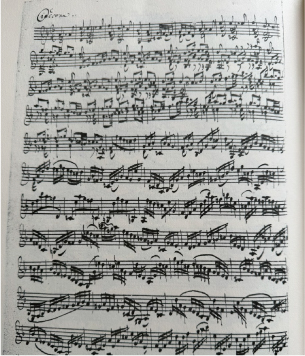
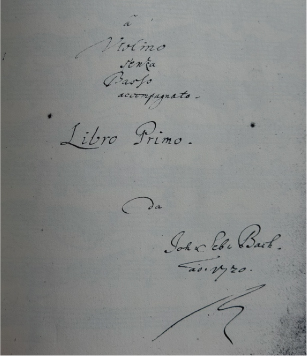
ヨハン・セバスティアン・バッハの
「6つのヴァイオリンソナタとバルティータ」の写譜(筆者所蔵)
人類の宝物である「Ciaccona:シャコンヌ」の筆文字も確認できる。