











ポンヌフがなくなっていた。
Column|2026.8.20
Text_Toshinori Okada
Photo_Toshinori Okada
ポンヌフが見えない。あるはずの場所に、大きな洞窟ができている。フランス人アーティスト、JRの「La Caverne du Pont Neuf」だ。セーヌ川に架かる、現存するパリ最古の橋を、全長120メートルのインスタレーションに変えてしまった。
しかし、パリはよくこんなことを受け入れたな。ポンヌフは歴史的建造物であり、観光名所であり、もちろん人も車も通る現役の橋でもある。車の通行を止め、歩行者を一方通行にして、巨大な作品に使わせる。東京で同じことをやろうとしたら、企画会議の早い段階で終わりそうな気がする。たぶん「安全面を考慮して」という、誰も反論できない言葉なんかで。
パリでも評判は割れていたらしい。「moche」、つまり見た目がよくない。「意味がわからない」「無駄だ」という声もあったという。
でも、これは立派なアートだった。「アートってなに?」と書き出したら、きりがないが、この「La Caverne du Pont Neuf」の場合、その場所を通り過ぎるはずだった人が立ち止まり、何かを言いたくなり、首を傾げ、考え、誰かと語り合う。それがアートなんだと思う。あれは好きだ、いや、ひどい。これこれしかじかの理由で、洞窟にしたらしい。俺はそうは思わない。そういうやりとりが、ポンヌフのまわりで次々に起きていたら、それは素敵だと思う。
この作品は、1985年にクリスト&ジャンヌ=クロードが同じポンヌフを布で包んだ「The Pont Neuf Wrapped」へのオマージュ。洞窟の姿は、ポンヌフの石材が切り出された石灰岩の採石場から発想したもの。そしてもうひとつ、洞窟の壁に映る影を現実だと思い込む囚人たちを描いた、プラトンの「洞窟の比喩」が重ねられている。JRによれば、いまの私たちにとっての影は、スマートフォンやアルゴリズムが見せる世界なのだという。
人に気づきを与え、考えさせる。それがアートの役割のひとつならば、この作品はかなり正しく機能していたことになる。「意味がわからない」という感想だって、考えたからこそ出てくる。
「芸術を理解している」という言い方は偉そうで好きじゃないけど、まだ評価の決まっていない表現に街の中心を使わせて、混乱も批判も引き受けるという判断には、やはり敬服する。そこにパリの底力を感じる。
いま、ポンヌフは元の橋に戻っている。洞窟はもうない。あれを無駄だと言った人も、たぶんいつものように橋を渡っている。
でも自分は、とにもかくにも、すごくいいアートを見せてもらったと思っている。あの洞窟を目にしたとき、呆然として、ただただ立ちすくんだ。そんな作品をつくるJRからは、これからも目が離せない。
Pont Neuf has vanished.
Pont Neuf cannot be seen. Where it should be, a giant cave has appeared. This is “La Caverne du Pont Neuf ” by French artist JR. He transformed Paris’s oldest surviving bridge over the Seine into a 120-meter installation.
Yet it’s remarkable how Paris allowed this. Pont Neuf is a historic monument, a landmark, and an active bridge for people and cars. Stopping traffic and making pedestrians move one-way for a massive artwork—trying this in Tokyo would likely die early in planning, silenced by unchallengeable phrases like “due to safety concerns.”
Reactions were split. Some called it “moche” (ugly), nonsense, or wasteful.
Yet this was true art. Define art, and there’s no end to it. But here, passersby stopped, tilted their heads, thought, and talked. “I love it.” “It’s terrible.” “He built a cave for this reason.” “I disagree.” Such lively exchanges around Pont Neuf are truly wonderful.
This work pays homage to Christo and Jeanne-Claude’s 1985 “The Pont Neuf Wrapped.” Its cave design draws from limestone quarries that supplied the bridge’s stone. It also layers Plato’s “Allegory of the Cave,” depicting prisoners mistaking shadows for reality. Per JR, today’s shadows are worlds shown by smartphones and algorithms.
If sparking awareness and thought is art’s role, this work functioned properly. Even calling it “nonsense” stems from thinking.
Permitting unproven expression in the city center while absorbing confusion and criticism shows judgment I admire deeply. There lies Paris’s true strength. Now Pont Neuf has returned to normal. The cave is gone. Critics likely cross as usual.
Yet I feel I saw magnificent art. Stunned, I stood frozen upon seeing that cave. I cannot take my eyes off JR.
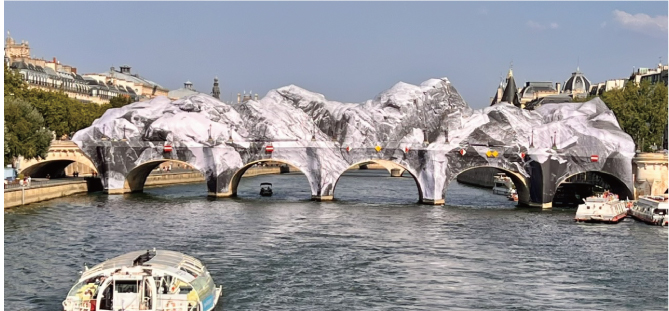
セーヌ川に横たわる洞窟が出現。
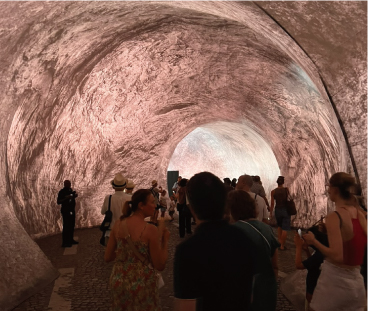
内部のサウンドデザインは
元Daft Punkのトーマ・バンガルテル。
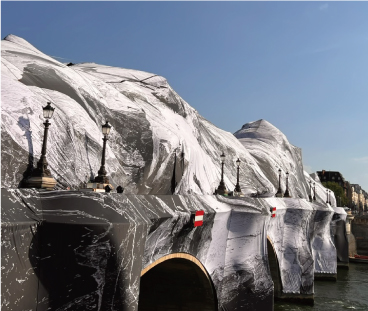
こんなアートが街中に出現する、それがパリ。