

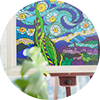

多彩な色が豊かな言葉になるとき。リッキーという画家の原点。
Feature | 2026.4.22
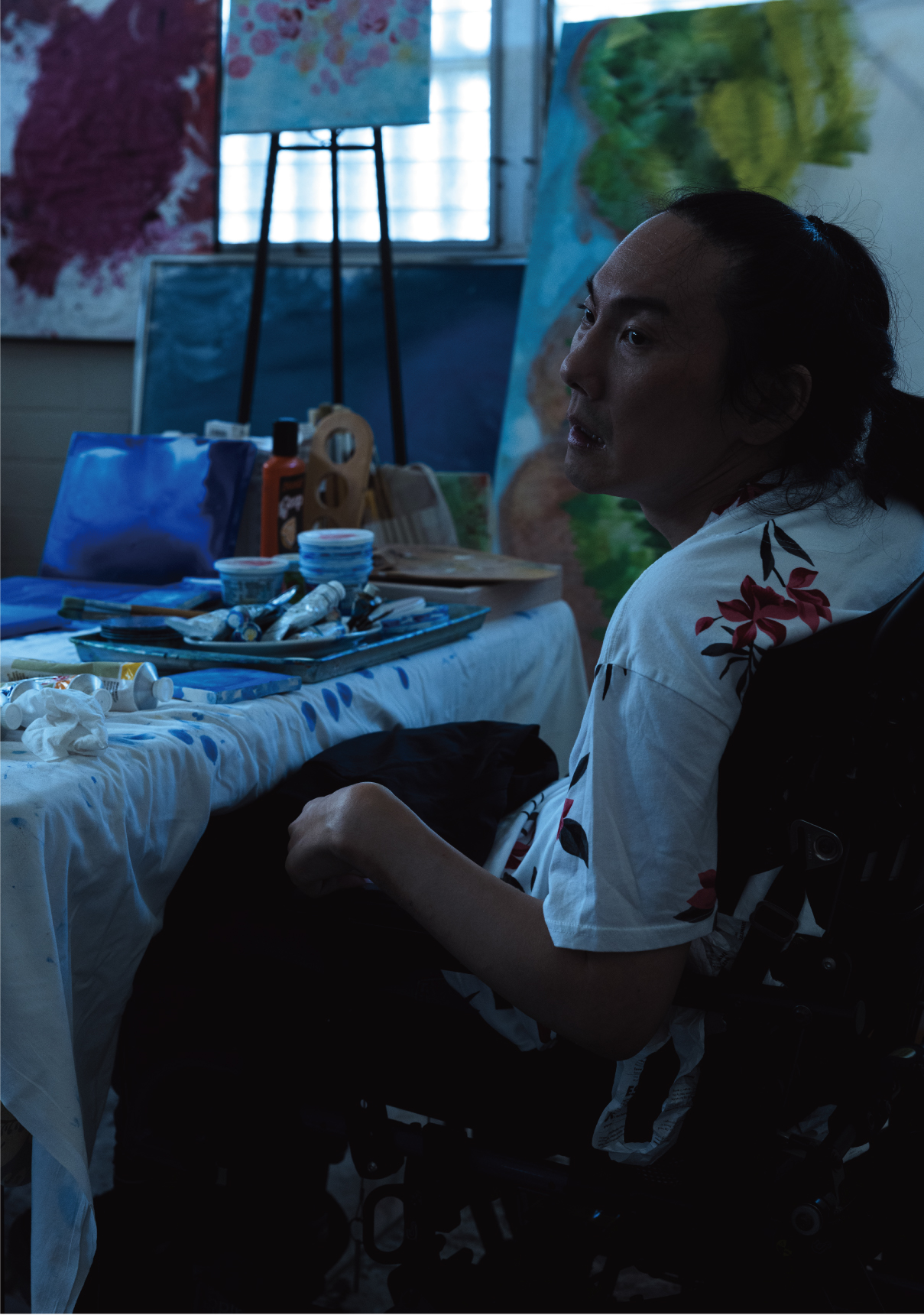
《画家》
浅井力也 Rikiya Asai
脳性麻痺の治療のため、4歳の時にハワイに移住。
この頃から絵具に興味を持ち始め、絵を描き始める。
6歳でハワイ美術院展に絵が入賞したことをきっかけに、世界各地で個展やワークショップを開催。
個性あふれるメッセージ性の強いアートワークが、国際的にも高く評価されている。
1999年
浅井力也画・浅井三和子文「キヤンバス」(いのちのことば社)刊行。
2001年
9・11の直後、ニューヨークでの「ピースアート展」100人のアーティストの1人として招待され「僕のスターウォーズ」を発表。
2002年
文部省検定小学校1年~6年国語の教科書(学校図書株式会社)の表紙に12作品が採用される。
2014年
New York国連本部へ日本代表で招集され、第65回国連DPI-NGO年次大会”Health, Freedom and Human Rights of the Disabled”会議へゲストパネリストスピーカーとして特別出席。
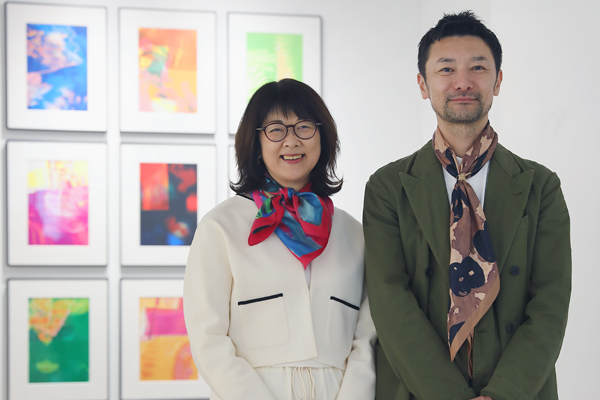
現在、世界各地で作品を発表しているアーティスト、浅井力也さん。通称 リッキー。その創作の原点をたどると、幼少期に暮らしたハワイの光と色、そして母の静かなまなざしに行き着く。
リッキーが初めて海を渡ったのは4歳のころ。それ以前、彼は日本で入退院を繰り返すほど体が弱く、週に一度は熱を出すような状態だったという。肺炎になることもあり、家族にとっては心配の尽きない日々。夜中に熱が上がり、急いで病院へ向かうことも珍しくなかったそうだ。
そんななか、母である三和子さんはある決断をする。暖かい場所に連れて行ってみよう―。そうして向かったのがサイパンだった。日本から3時間ほどで行ける距離。もし体調が悪くなっても、すぐに帰国できるという安心もあった。
2週間ほどの滞在のつもりだった。しかし、そこで思いがけない出来事が起こる。なんと、リッキーは一度も熱を出さなかった。穏やかな気候が体に合ったのかもしれない。海辺の風に吹かれながら過ごす時間のなかで、体調はゆっくりと安定していった。家族にとって、それは小さな奇跡のように感じられた。
そんなサイパンのビーチで、ひとりのアメリカ人男性が声をかけてきた。スミス氏という人物だった。実は彼は機能訓練の資格を持つ専門家で、その後、三和子さんの自宅にも足を運び、継続的にリッキーを指導してくれるようになった。
ある日、スミス氏はハワイのシュライナーズ病院の医師を紹介。リッキーは、子どもの医療で知られるこの病院で診察を受けることになった。シュライナーズ病院はアメリカ各地にある小児専門病院で、治療費を基本的に無料で提供している施設だった。
当時、リッキーの足の筋肉は手術の必要があるといわれていたが、シュライナーズ病院での診察の結果は違い、リハビリの効果で筋肉は改善しており、手術は必要ないという判断だった。家族にとって、それは胸をなでおろす瞬間だった。
この出来事がきっかけとなり、家族はハワイで暮らすことを決める。見知らぬ土地、しかしそこには子どもを受け入れてくれる温かな空気があった。
家の近くにはトーマス・ジェファーソン小学校という学校があった。幼稚園と小学校が併設された校舎。親子はよく、その学校を外から眺めていたという。校庭で遊ぶ子どもたちの声を聞きながら、いつかここで学べたらと考えていた。
ある日、副校長が声をかけてきた。「学校に興味があるのですか」。事情を話すと、彼はそのまま教室へ案内してくれた。本来ならビザがなければ入学はできない。しかし副校長はこう言った、「子どもが幸せに学べることが一番大事です」。制度よりも子どもの可能性を大切にする。その言葉に、三和子さんはアメリカの教育の懐の深さを感じたという。こうしてリッキーは、ハワイでの学校生活を始めた。
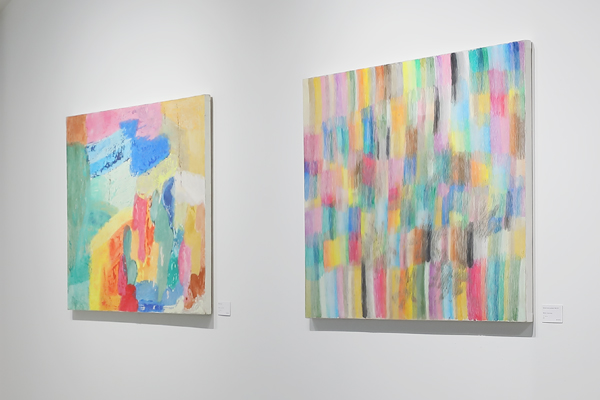
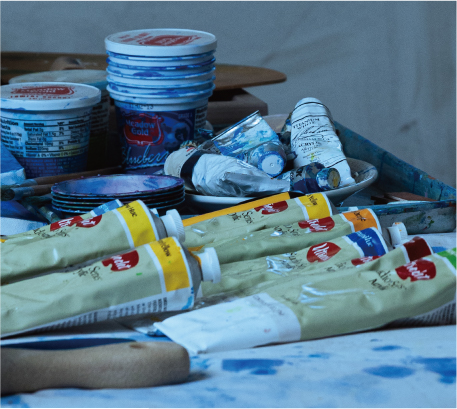
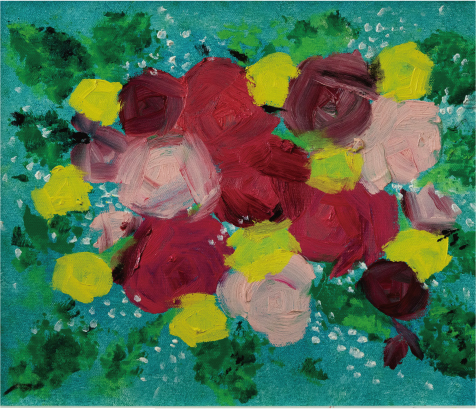
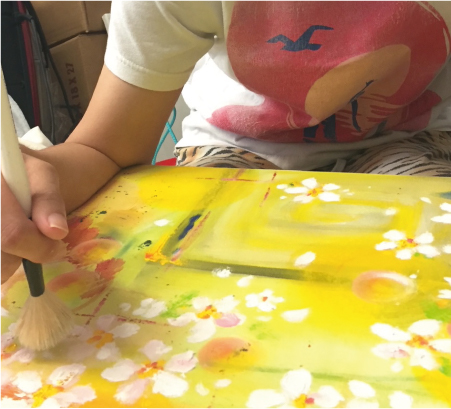
その頃から、リッキーは絵の具に強い興味を示すようになる。最初は幼稚園のお絵描きだったが、やがて色そのものに夢中になった。おもちゃ屋で買った絵の具に指を入れ、叩き、広げる。その動きのなかで、色は彼の感情を語る手段になっていく。
言葉の少ない子どもだったリッキーにとって、色は心のバロメーターだった。暗い色を使う日は体調がすぐれず、明るい色を選ぶ日は気持ちが弾んでいる。三和子さんは、その変化を日記に書き留めていたという。色が心と深く結びついていることに、少しずつ気づいていった。
リッキーが描く絵は、彼の内側の世界を映す窓になっていった。色を重ねるたびに、言葉にならない思いが少しずつ外の世界へと現れていった。その色は、やがて彼だけの自由な創作へと広がっていく。
When a riot of color becomes a rich language.
The origin of the painter Ricky.
Today, Rikiya Asai—or Ricky—is a celebrated artist whose soulful works reach audiences globally. His creative journey began with the radiant light of Hawaii and the steady devotion of his mother, Miwako.
Before age four, Ricky’s life in Japan was a cycle of frailty and frequent hospitalizations. Plagued by weekly fevers and recurring pneumonia, his health was a constant source of anxiety for his family, often leading to frantic midnight trips to the emergency room. Seeking a breakthrough, Miwako made a pivotal decision: “Let us take him somewhere warm.”
They chose Saipan, only three hours from Japan. What was meant to be a short stay became a miracle: in the mild climate and seaside breeze, Ricky did not suffer a single fever. His health finally stabilized, a gift that felt like a divine intervention. On a Saipan beach, they met Mr. Smith, a physical therapy specialist who began providing Ricky with consistent guidance.
He eventually introduced them to Shriners Hospital in Hawaii. While previous medical opinions insisted Ricky’s legs required surgery, the specialists at Shriners delivered a life-changing diagnosis: through persistent rehabilitation, his muscles had improved enough that surgery was unnecessary. For Ricky and his family, this moment of overwhelming relief opened a new chapter, leading to the vibrant world he paints today.
This sequence of events led the family to a life-altering decision: they would move to Hawaii. Though it was an unfamiliar land, they found a warm, inclusive atmosphere that embraced children. Near their new home stood Thomas Jefferson Elementary School. Miwako and Ricky often stood outside, watching the students and listening to their voices, secretly hoping that he might one day join them. One day, the vice principal noticed them and asked, “Are you interested in our school?” Upon hearing their situation, he welcomed them inside. Despite the lack of a formal visa at the time, he stated firmly, “The most important thing is for a child to learn happily.” His willingness to prioritize a child’s potential over rigid regulations deeply moved Miwako, revealing the profound depth and compassion of American education.
In this supportive environment, Ricky began to show a passionate interest in paint. What started as simple preschool drawings soon became a fascination with color itself. He would dip his fingers into vibrant pigments, striking and spreading them across the paper. For a child who spoke very few words, these colors became a vital means of communication—a “barometer of the heart.” Miwako noticed that on days when he felt unwell, he reached for darker tones, while bright hues signaled a joyful spirit. She meticulously recorded these emotional shifts in her diary, realizing that color and soul were deeply intertwined. Ricky’s paintings became windows into his inner world, where layers of unspoken thoughts finally found their way out, evolving into the uniquely free and vivid creations he shares with the world today.

閲覧中の特集はこちら