










樹海の深奥に、神を見る。
Feature | 2026.10.19
「樹海」という言葉には、重たいものがついてくる。暗い。怖い。入ったら出られない。テレビや映画のせいか、行ったことのない人の頭にも、すでに樹海らしき風景ができあがっている。僕も、たぶんそうだった。
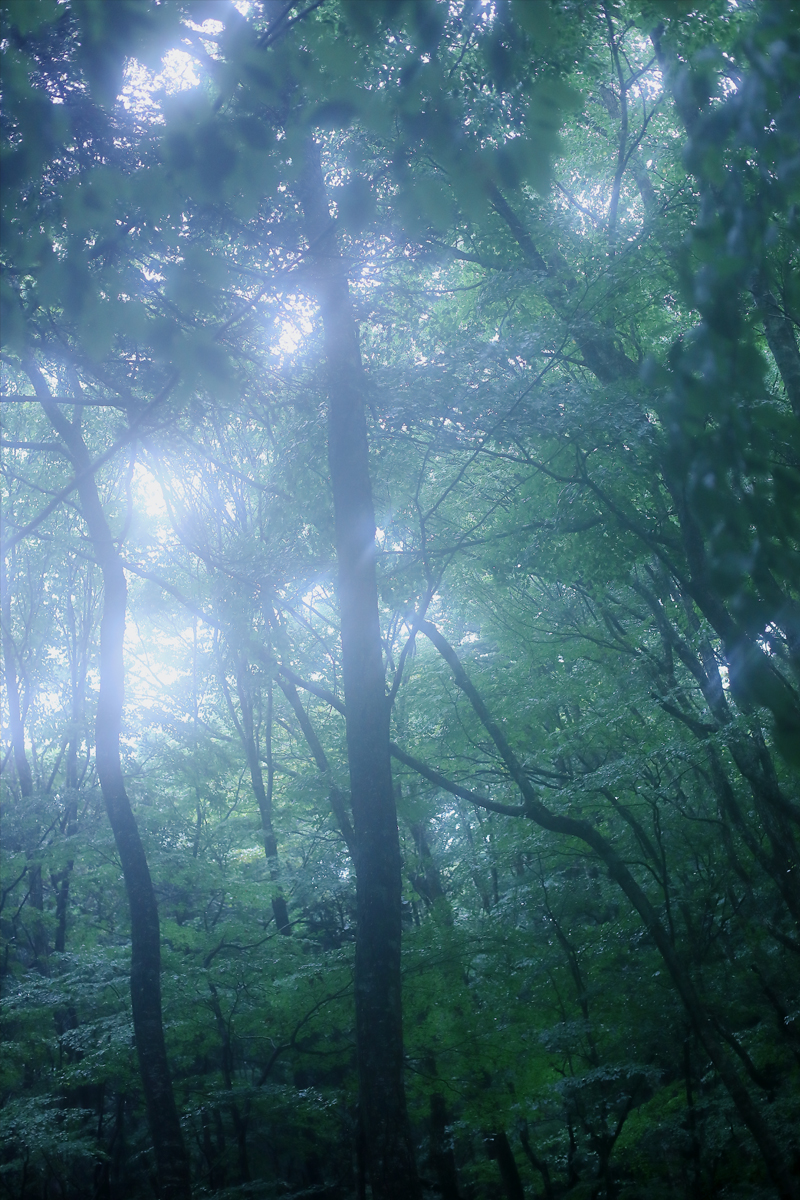
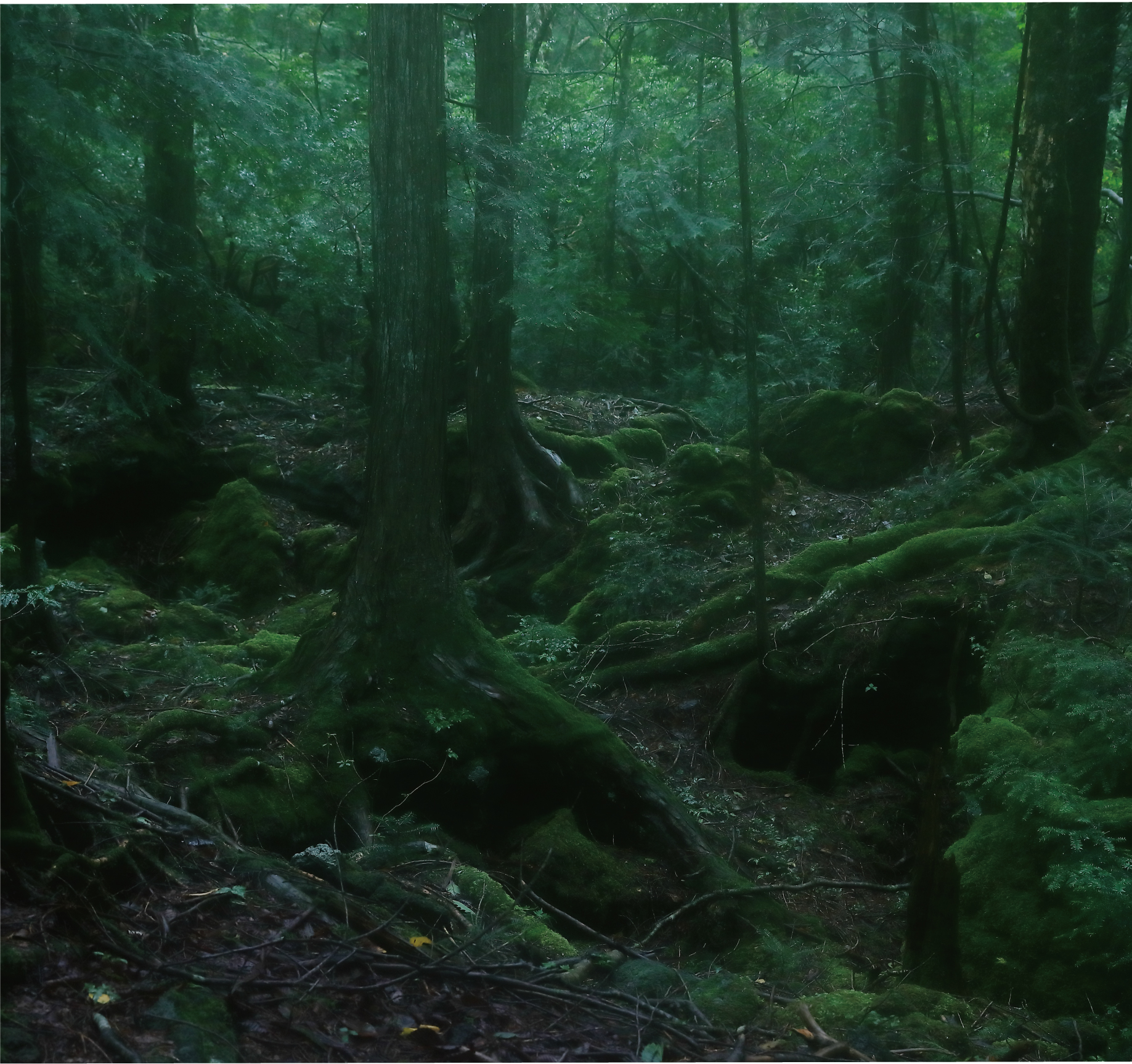
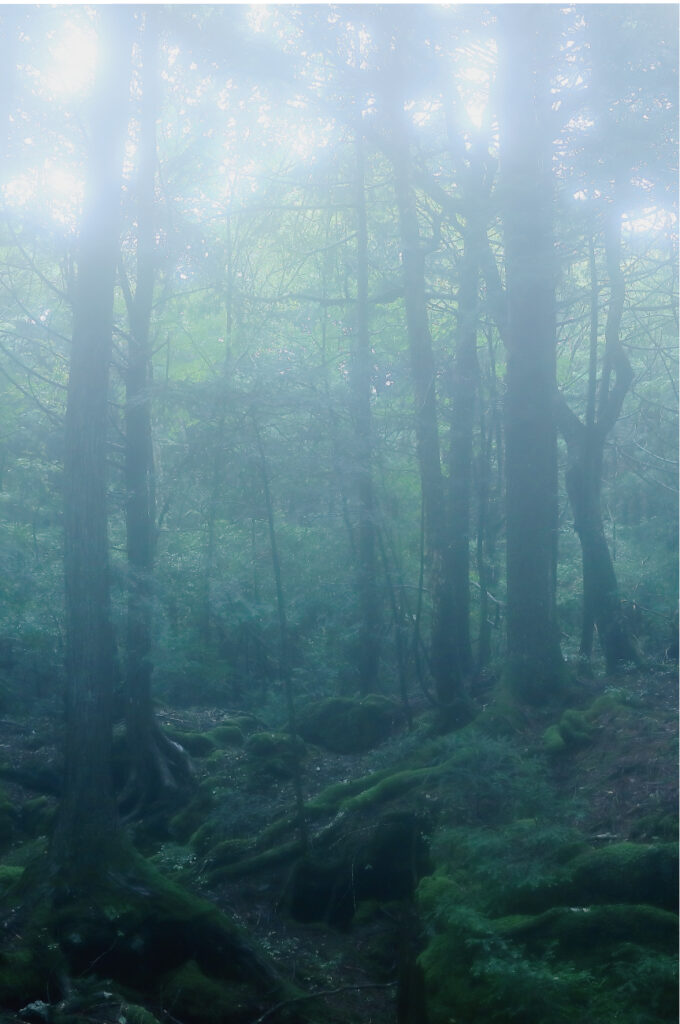
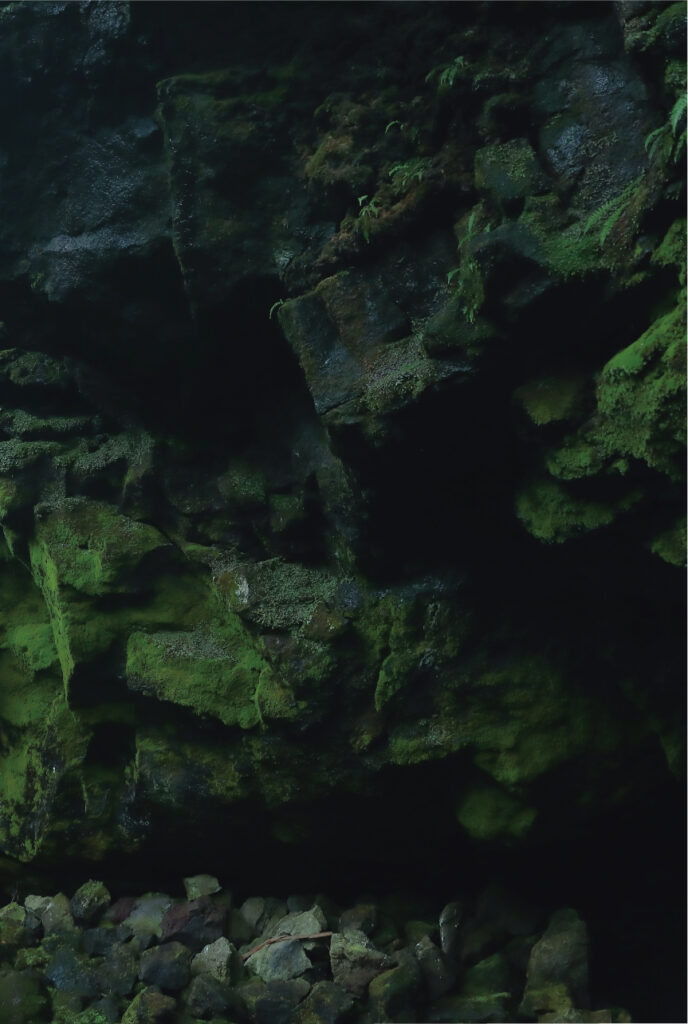
取材の日は、雨。空は低い雲に覆われ、富士山はとうとう姿を見せなかった。せっかくここまで来たのに、とは思う。ところが樹海へ入ると、雨でよかったのかもしれないと思い直した。曇っているのに、森は想像していたよりずっと明るい。苔は水を含み、木肌は黒く濡れ、葉の緑が何段階にも濃くなっている。自然が、怖いほどにイキイキしていた。
晴れた樹海はまだ知らない。でも、曇天の樹海も、かなりいい。
不思議なのは、これだけ雨が降っているのに、水溜まりがほとんどないことだ。地面の下には細かな穴や亀裂の多い溶岩があり、降った雨はすぐにしみ込んでしまう。あたり一面濡れているのに、ぬかるんでいない、妙な地面。
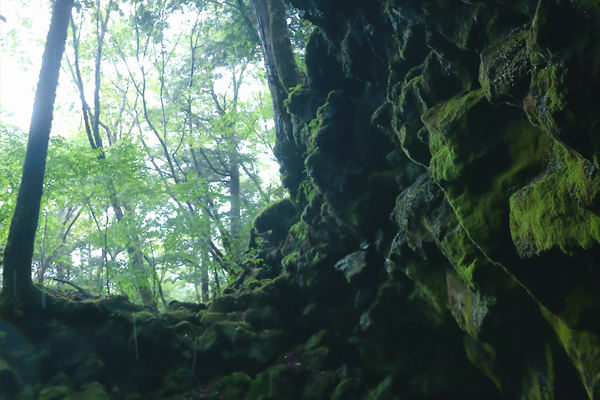
森の中は、かなりごちゃごちゃしている。苔の下にはごつごつした溶岩があり、穴や亀裂もある。根をまたぎ、足を置く場所を探しながら進むうちに、歩く速度が落ちてくる。
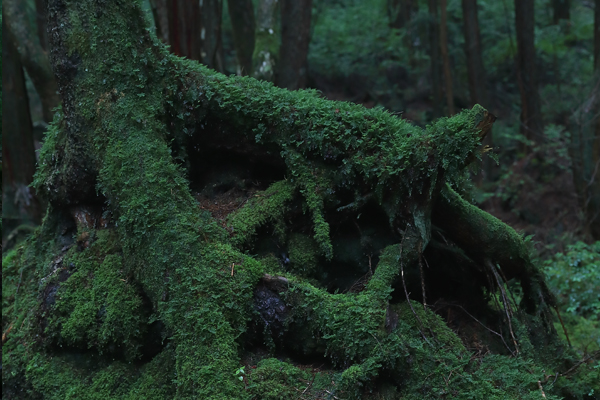
すると、いろいろなものが目に入る。一本の木についた様々な姿の苔。倒木の脇から伸びる若い木。むき出しの溶岩。雨粒が葉を叩く音や、自分の靴が地面を踏む音も、さっきよりはっきり聞こえた。
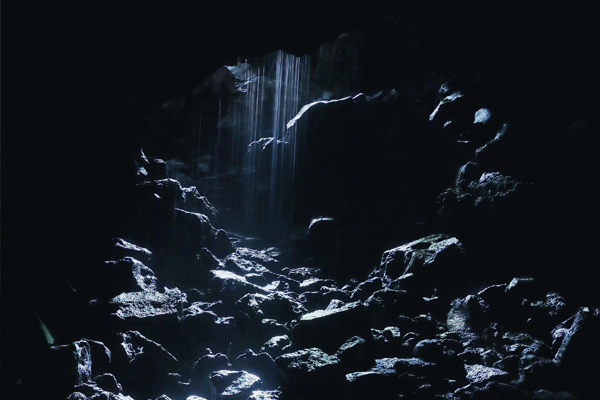
樹海の面白さは、ひとつの絶景を目指すこととは少し違う。歩いているうちに、こちらの目や耳のほうが変わってくる。ふいに大きな穴が現れる。それが溶岩洞穴だと知っていても、森の中に黒い口が開いていると、やはりぎょっとする。修験者や富士講の人々が、そこへ入り、祈り、修行した。そう聞いたあとでは、穴の暗さも別のものに見える。
遠くから眺める富士山は、あまりにも姿が整っている。けれど裾野へ入ると、溶岩はねじれ、木は曲がり、根は行き場を探して地面を這っている。倒木の上では、もう次の木が育ち始めていた。圧倒的な自然の力を感じ、少し怖い。だから、つい先を見たくなる。
その日、富士山を一度も見ることはできなかった。それでも、ずっと富士山がつくった地面を歩いていた。姿は見えなくても、足元の溶岩が、ここが富士山と地続きであると知らせてくる。
そして不思議に思った。これほど岩だらけの土地に、どうしてこんな森ができたのだろう。
Finding the sacred deep within the Jukai forest.
The word Jukai carries heavy baggage: dark, ominous, impossible to escape. Pop culture constructs a vivid picture even for first-time visitors—and I was no exception.
It rained on the day of our coverage. Low clouds hid Mt. Fuji, but stepping into the forest changed my perspective. Despite the overcast sky, the woods were far brighter than expected. Moss drank in moisture, tree trunks glistened black, and leaves deepened into layered shades of green. Nature was intensely, almost overwhelmingly alive.
Curiously, despite heavy rain, puddles were nowhere to be found. The ground—porous lava filled with fissures—absorbed rainfall instantly, leaving a wet yet firm path.
The forest floor is rugged, strewn with jagged lava and exposed roots that demand careful steps. As your walking pace slows, details come into focus: diverse mosses clinging to a single trunk, young saplings rising beside fallen trees, and the clear crunch of your boots above the gentle patter of rain.
The beauty of Jukai forest is not about chasing an iconic vista; walking here transforms your senses. A cavernous opening appears—a gaping black lava cave that gives you pause. Knowing shugensha and Fuji-ko pilgrims trained here gives that darkness profound weight.
Mt. Fuji appears symmetrical from afar, yet its base reveals twisted lava, gnarled trees, and creeping roots. New life sprouts atop fallen trunks. Facing this overwhelming force feels humbling, even unnerving.
Though Mt. Fuji remained hidden that day, we walked ground shaped by its hand. The lava beneath our feet confirmed we were part of the mountain.
It leaves you wondering: how did such a lush forest emerge from barren rock?

閲覧中の特集はこちら